
Outdoor blinds vs glass: the best way to enclose a Melbourne alfresco
Clear café blinds, zip-track screens or glass sliding doors? An honest comparison of cost, lifespan, warmth and view for enclosing a Melbourne alfresco.
By Glassy Slide teamPublished 3 min read
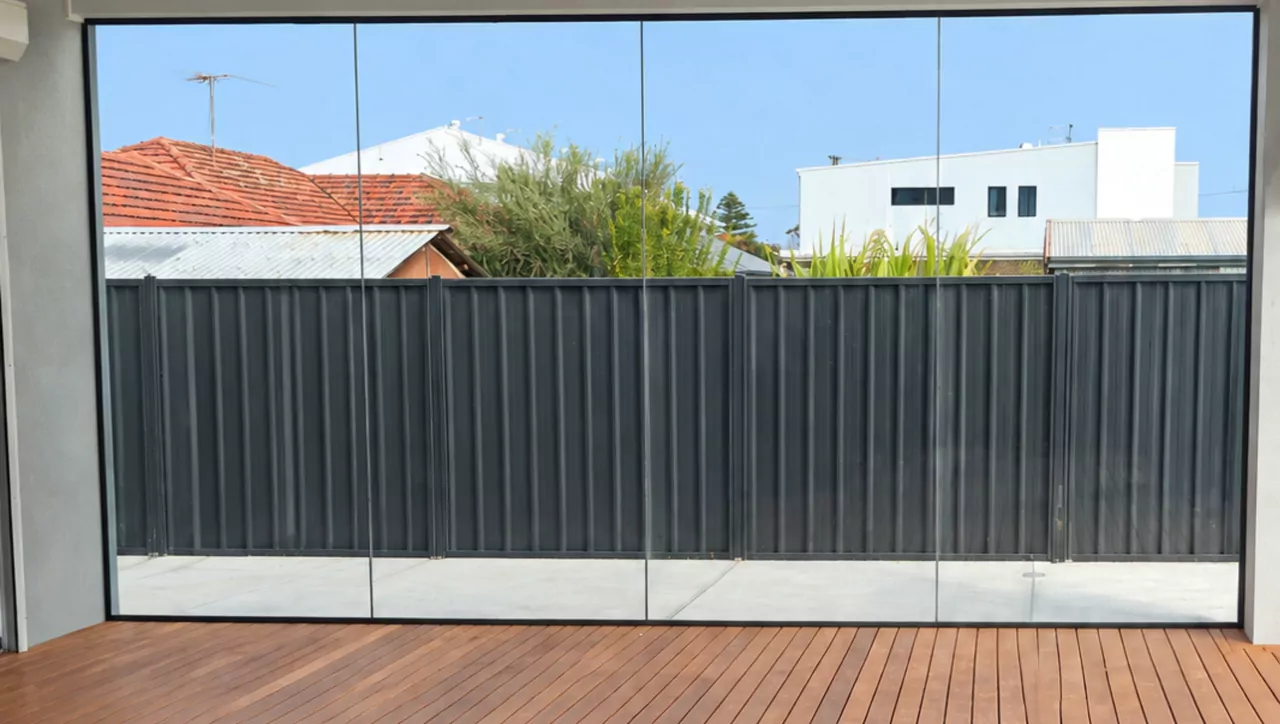
"Should we just get blinds?" is the first question most people ask us. It's a fair one: blinds cost less up front and go in quickly. Glass costs more and does more. Here is how the two compare in Melbourne conditions, so you can choose with your eyes open.
The options in one table
| Clear PVC café blinds | Zip-track screens | Glass sliding or stacking panels | |
|---|---|---|---|
| What it is | Clear PVC sheet that rolls down | Fabric or PVC held in side channels, manual or motorised | Aluminium-framed safety glass on tracks |
| Upfront cost | Lowest | Low to medium | Highest |
| Lifespan | PVC often 5–10 years | Fabric or PVC replaced in time; tracks last longer | Glass and frames last decades with roller and seal service |
| Wind and rain | Good when down and fastened | Good; channels stop flapping | Very good; panels close against seals |
| Warmth in winter | Some | Some | Best of the three |
| View | Can cloud, wrinkle or yellow over time | Mesh gives a screened view; clear PVC as for café blinds | Clear, like a window |
| Security | None | Little | Lockable doors |
| Open in summer | Roll up | Roll up | Slide or stack the panels aside |
What blinds cost, and what glass costs
Published Melbourne prices in 2026 put a zip-track screen for a typical 3 × 2.5 m opening at roughly $1,500 to $2,500 installed, depending on manual or motorised operation. Clear café blinds can be cheaper per opening, though quotes vary widely with size and fittings.
Glass is priced per bay (the opening between two posts). For aluminium-framed glass panels on an existing roofed alfresco, expect about $2,500 to $6,000 per bay, so a three- to five-bay enclosure often lands between $7,500 and $30,000. Our alfresco enclosure cost guide explains what moves that number.
Where blinds make sense
- A tight budget or a quick fix before winter.
- A rental, or a home you'll sell soon.
- Shade and insect screening in summer more than winter warmth.
- An open look you want to keep, with the blinds up most of the year.
Clear PVC has limits. Sun and heat age it: the sellers themselves note that clear PVC can distort with UV, and warranties on the PVC skin are short or excluded. Mesh lets air through, so it won't stop wind-driven rain.
Where glass earns its price
- You want to use the room in July, not only on mild days. Framed glass seals, so a heater actually warms the space.
- The view matters. Glass stays clear; you look through it, not at it.
- Security. Sliding panels lock, so the alfresco can hold furniture, a TV or an outdoor kitchen.
- It's for the long term. Glass and aluminium frames last, and the moving parts can be serviced.
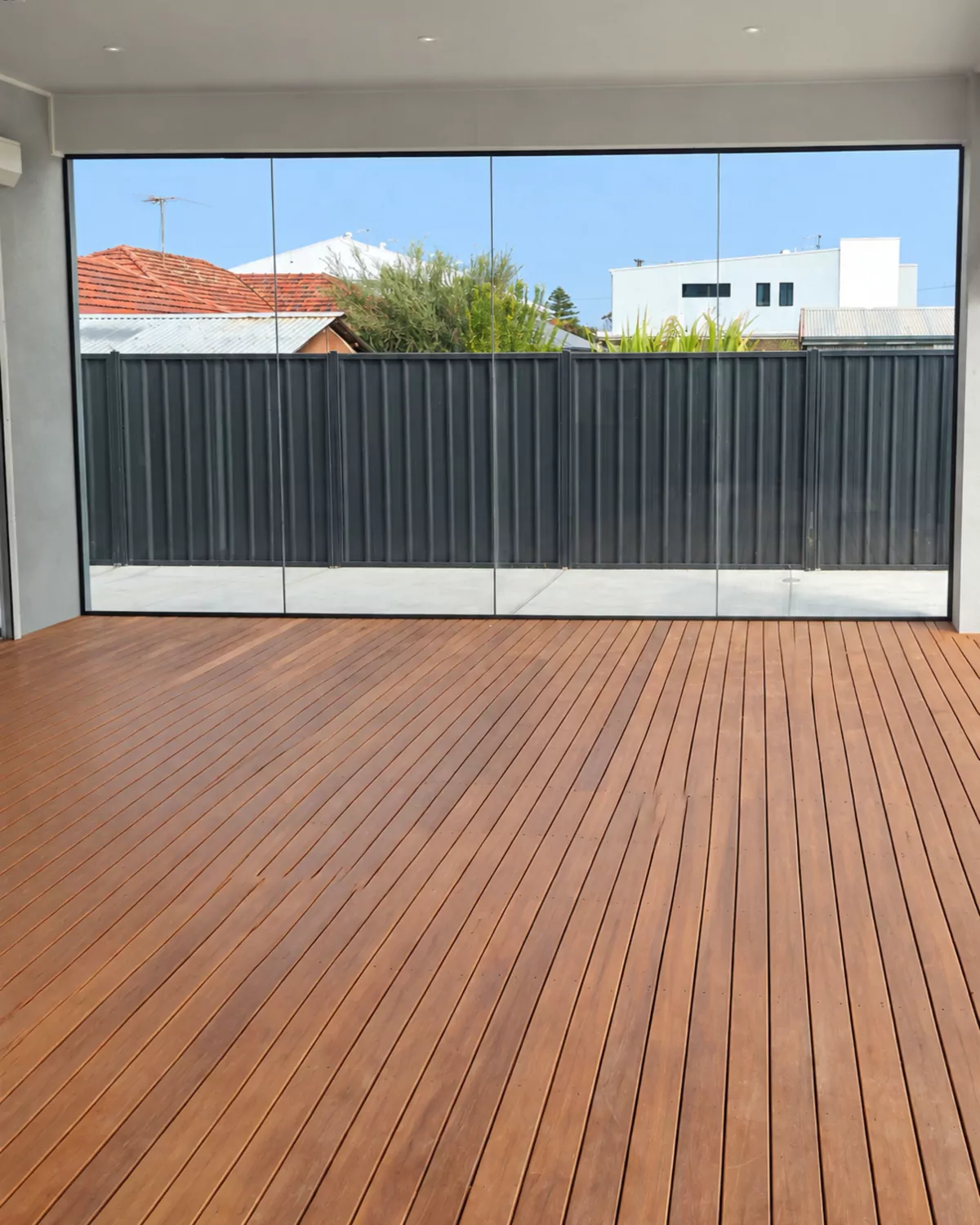
A middle path many Melbourne homes choose
You don't have to choose one for every side. Fixed glass on the side that takes the prevailing wind blocks the weather for good. Sliding or stacking glass on the garden side opens up in summer. Some people add a blind for shade on the hottest side. Our alfresco enclosure ideas show these layouts.
Before you decide
Whichever way you go, a roofed alfresco already counts as a verandah under Victorian building rules, and enclosing it is building work. Read our guide on permits for enclosing an alfresco before you order.
We build the glass option: aluminium-framed sliding, stacking and fixed panels, made to measure. We measure on site, quote in writing and price the job before we start. See our alfresco enclosures or ask for a quote.
Questions
What is the best way to enclose an alfresco?
It depends on how you use it. Clear outdoor blinds are the lower-cost way to cut wind and rain. Glass sliding or stacking panels cost more but last longer, keep more warmth in, keep the view clear and lock. Many Melbourne homes use glass on the weather side and open the rest in summer.
Are clear PVC blinds or glass warmer in winter?
Glass. Blinds stop the wind but seal less tightly and hold little heat. Framed glass panels close against seals, and the room behind them stays noticeably warmer on a still evening with a heater on.
How long do outdoor blinds last?
Clear PVC is usually quoted at around 5 to 10 years before it yellows, clouds or goes brittle, depending on sun and care. The aluminium tracks and motors last longer. Glass doesn't age that way; rollers and seals are the parts that eventually need service.
Can I start with blinds and add glass later?
Yes, but plan for it. Glass panels need their own frames and tracks fixed to the posts and beams, so check that blind boxes and tracks won't be in the way later.
Do blinds or glass need a permit?
The roofed alfresco itself already counts as a verandah, which needs a building permit in Victoria. Enclosing it with glass is further building work. Ask a building surveyor how your plan is treated before you order either.
Was this guide helpful?

We supply and install double-glazed aluminium windows and doors, alfresco enclosures and glass partitions, and repair timber windows across Melbourne from our base in Bundoora. 5.0 ★ on Google.
Keep reading
Related guides
Alfresco2 min read
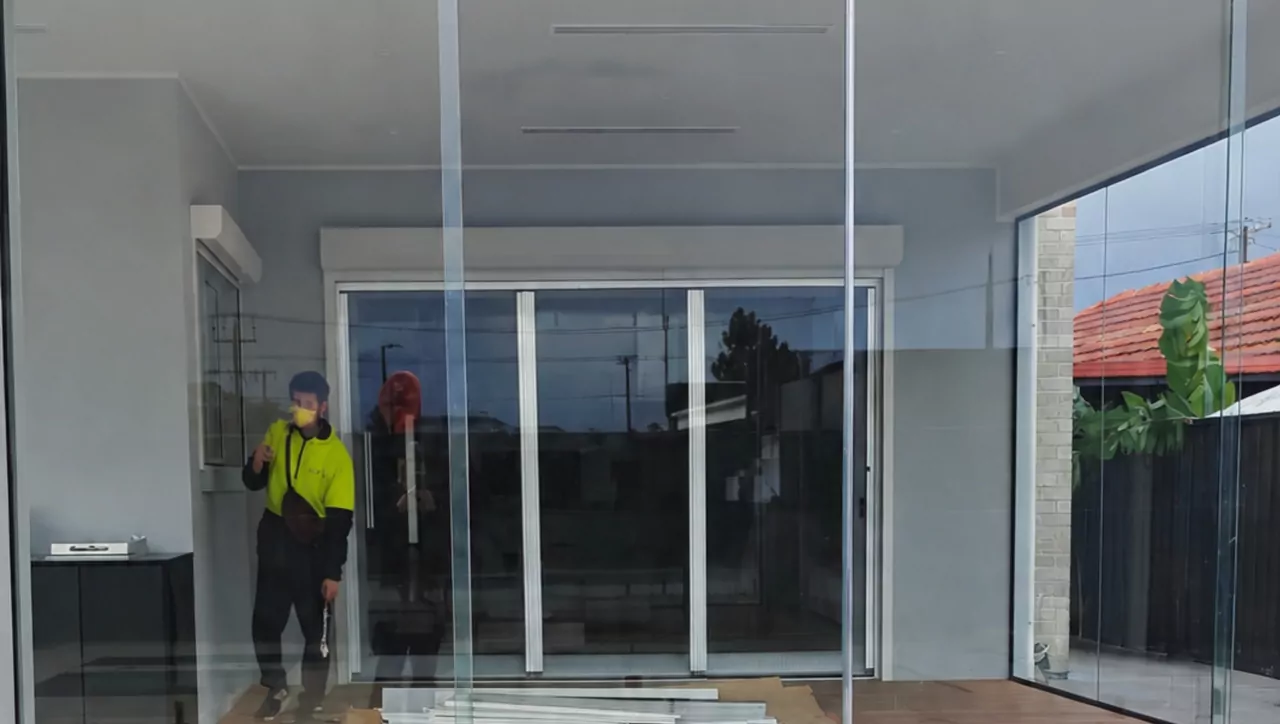
Enclosing a townhouse alfresco or balcony: owners corporation approval in Victoria
How owners corporation approval works in Victoria when you want to enclose a townhouse balcony, courtyard or alfresco with glass, and what to send.
Alfresco3 min read
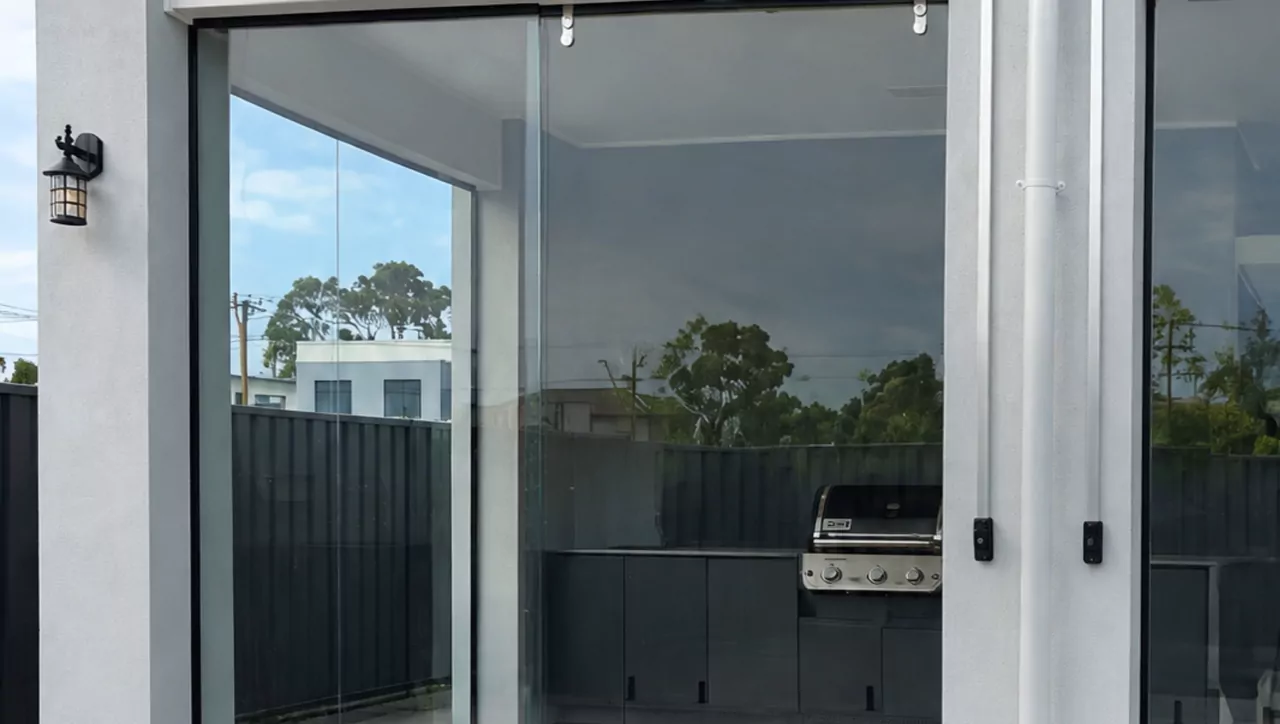
Enclosing an alfresco in a bushfire-prone area: BAL ratings explained
What a BAL rating means for the glass and frames when you enclose an alfresco in a Victorian Bushfire Prone Area, and what to check before you order.
Alfresco4 min read
Do you need a permit to enclose an alfresco in Victoria?
When enclosing an alfresco with glass needs a building permit in Victoria, when a planning permit applies too, and what to sort out before ordering glass.