
Will a glass alfresco get too hot or fog up?
Why an enclosed glass alfresco can overheat in summer or fog up in winter, and the design choices that prevent both, from opening panels to the glass.
By Glassy Slide teamPublished 2 min read
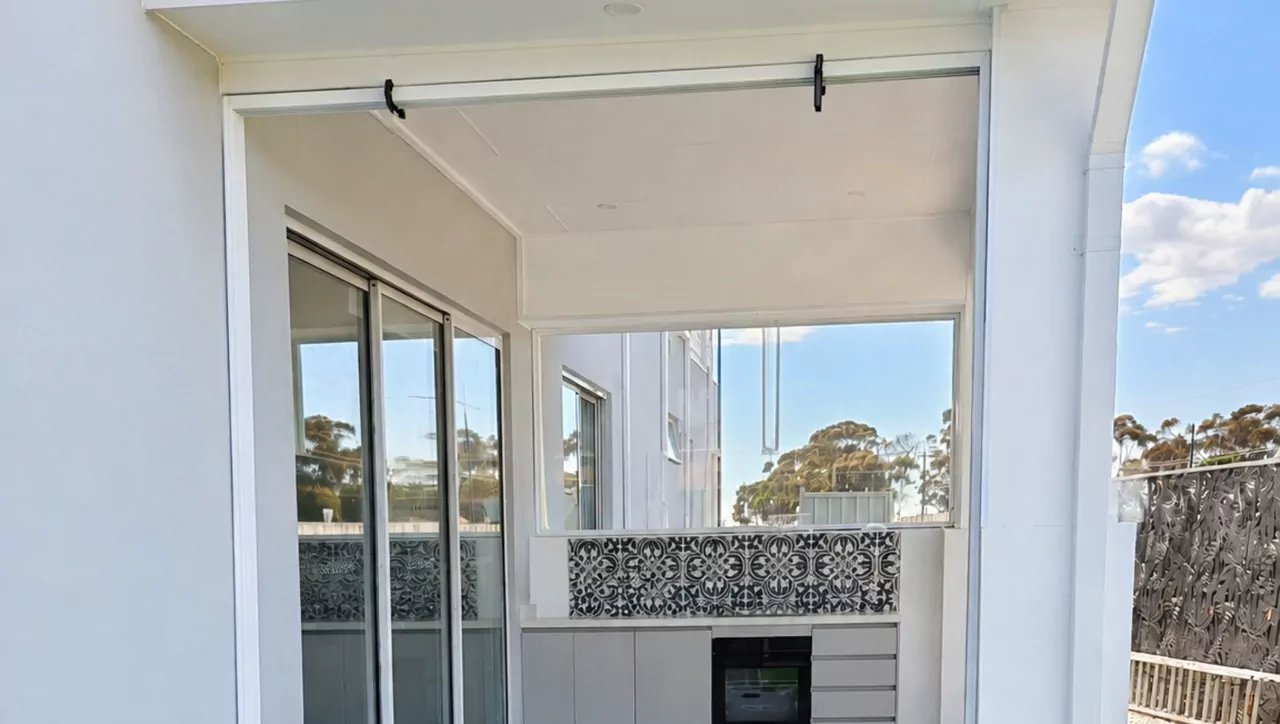
The two worries we hear most about glass enclosures are opposite ones: "Won't it be an oven in January?" and "Won't the glass stream with water in July?" Both happen when a glass room can't breathe. Both are easy to design out.
Summer: let the heat out
Glass lets in sunlight, which turns to heat inside. In a room that can't open, that heat builds up, much like a greenhouse. The fixes:
- Panels that open. Sliding or stacking glass on at least one side, ideally two, lets a breeze through. On a hot day you can open most of the wall and it feels like an open alfresco again.
- The right glass for your aspect. North- and west-facing glass gets the most sun. Ask about toned glass, which cuts glare, or Low-E glass, which has a coating that reflects heat.
- Shade over a glass roof. A glass roof on a north or west aspect benefits from a shade blind or sail in midsummer.
- Insect screens on the panels that open, so you can leave them open on summer evenings.
- A ceiling fan keeps air moving on still days.
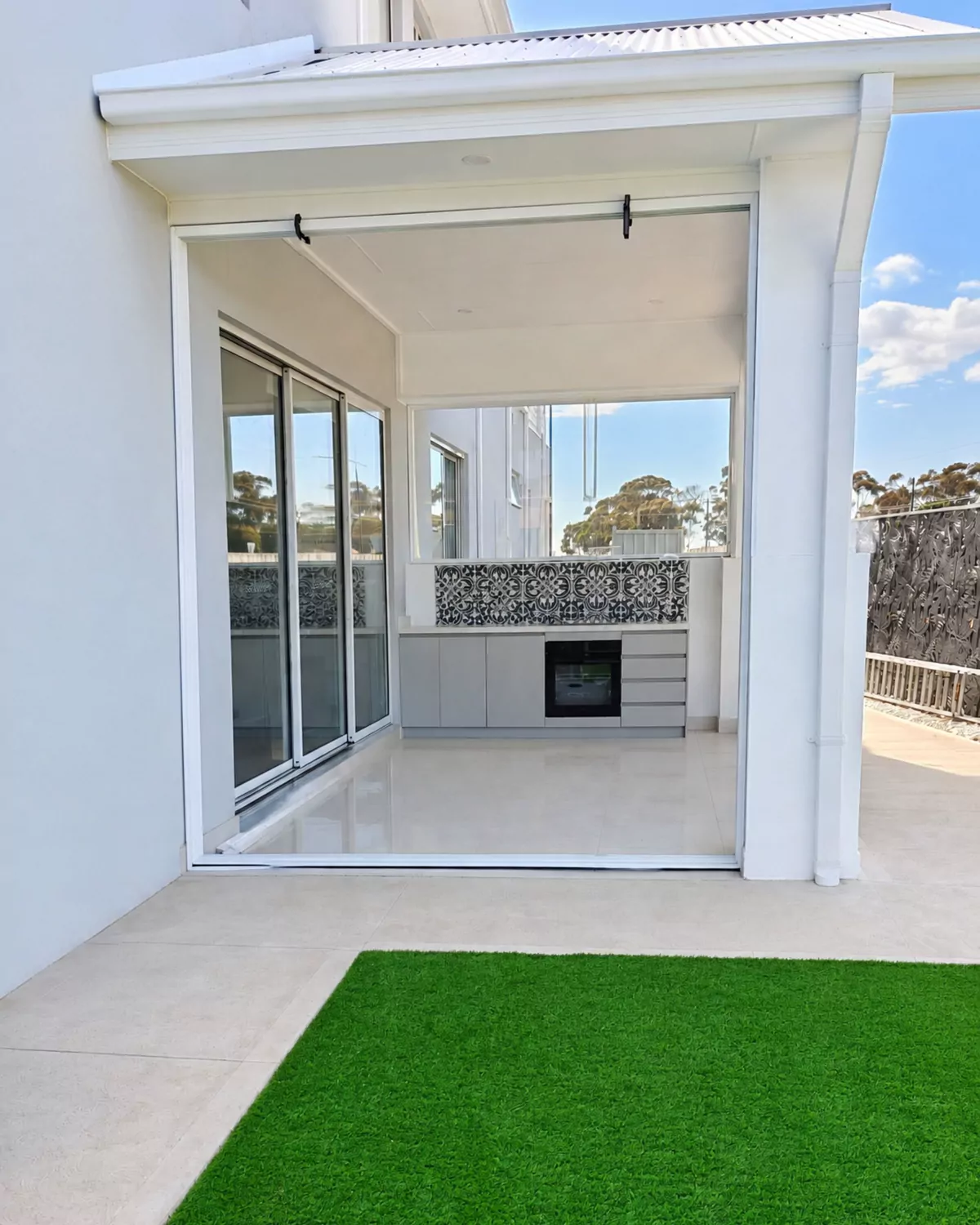
Winter: let the moisture out
Fogging is condensation. Warm, moist air touches the cold glass and the water in the air turns to droplets on it. In a closed alfresco the moisture comes from people breathing, cooking (especially in an outdoor kitchen), unflued gas heaters and wet coats or umbrellas.
The fixes:
- Crack a panel open. A gap of a few centimetres lets moist air out while the heater runs. Sliding panels make this easy.
- Use an extractor or range hood over an outdoor kitchen.
- Use electric heaters, not gas patio heaters, which add moisture and aren't designed for closed rooms. See how to heat an enclosed alfresco.
- Consider double glazing if you'll heat the room most evenings. The inner pane stays warmer, so less moisture condenses on it.
The room behind needs air too
Many alfrescos sit in front of a living room or kitchen whose windows open onto them. When you glaze the alfresco, that room gets its daylight and fresh air through the enclosure. The building code allows this, but sets minimum glass and opening areas for the enclosure, worked out from the floor area of both rooms together. Your building surveyor checks it as part of the permit. See do you need a permit to enclose an alfresco?.
Design it to breathe from the start
The best time to solve heat and moisture is when you choose the layout: opening panels where the breeze comes from, fixed glass where the weather comes from, and the right glass on the sunny side. Our alfresco enclosure ideas show these layouts, and our alfresco enclosure cost guide shows what they cost.
We supply toned, Low-E and double-glazed glass, and insect screens. We measure on site, look at which way your alfresco faces, and quote in writing with the glass for each side listed. See our alfresco enclosures or ask for a quote.
Questions
Does a glass alfresco get too hot in summer?
It can if it can't be opened. Sliding or stacking panels that open most of a wall let the heat out, and a glass roof facing north or west benefits from toned or Low-E glass and some shade.
Why does my glass room fog up?
Warm, moist air meets cold glass and the moisture condenses on it. People, cooking, gas heaters and wet clothes all add moisture. Opening a panel a little to let the moist air out is the quickest fix.
Does Low-E or toned glass help?
Toned glass cuts glare and some heat. Low-E glass has a coating that reflects heat and helps on both hot and cold days. Which suits you depends on which way the alfresco faces.
How much of the enclosure should open?
Enough to get a cross-breeze in summer. If the alfresco also gives the room behind it its fresh air, the building code sets a minimum opening area. Your building surveyor will check it.
Was this guide helpful?

We supply and install double-glazed aluminium windows and doors, alfresco enclosures and glass partitions, and repair timber windows across Melbourne from our base in Bundoora. 5.0 ★ on Google.
Keep reading
Related guides
Alfresco2 min read
Enclosing a townhouse alfresco or balcony: owners corporation approval in Victoria
How owners corporation approval works in Victoria when you want to enclose a townhouse balcony, courtyard or alfresco with glass, and what to send.
Alfresco3 min read
Enclosing an alfresco in a bushfire-prone area: BAL ratings explained
What a BAL rating means for the glass and frames when you enclose an alfresco in a Victorian Bushfire Prone Area, and what to check before you order.
Alfresco4 min read
Do you need a permit to enclose an alfresco in Victoria?
When enclosing an alfresco with glass needs a building permit in Victoria, when a planning permit applies too, and what to sort out before ordering glass.