
Laminated vs toughened glass for an alfresco roof and walls
Why alfresco glass roofs are laminated, where toughened glass suits the walls, what AS 1288 and AS 2047 mean, and what a quote's glass line should say.
By Glassy Slide teamPublished 2 min read
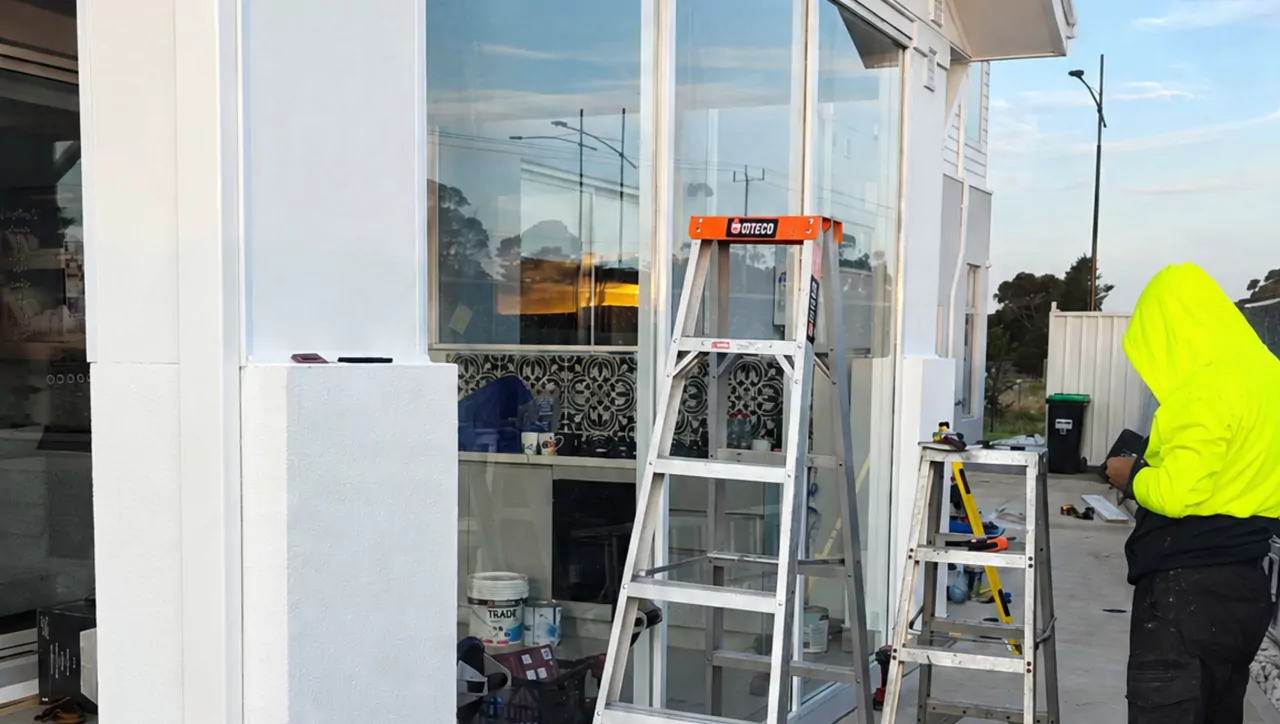
"Safety glass" covers two different products, and an alfresco enclosure usually uses both. Knowing which goes where makes quotes easier to compare and helps you spot one that cuts corners.
The two safety glasses in a sentence each
- Toughened glass is heat-treated so it is about four to five times stronger than ordinary glass. When it breaks, it shatters into small, blunt pieces.
- Laminated glass is two sheets bonded with a plastic interlayer. When it breaks, it cracks but the pieces stay stuck to the interlayer and the pane stays in the frame.
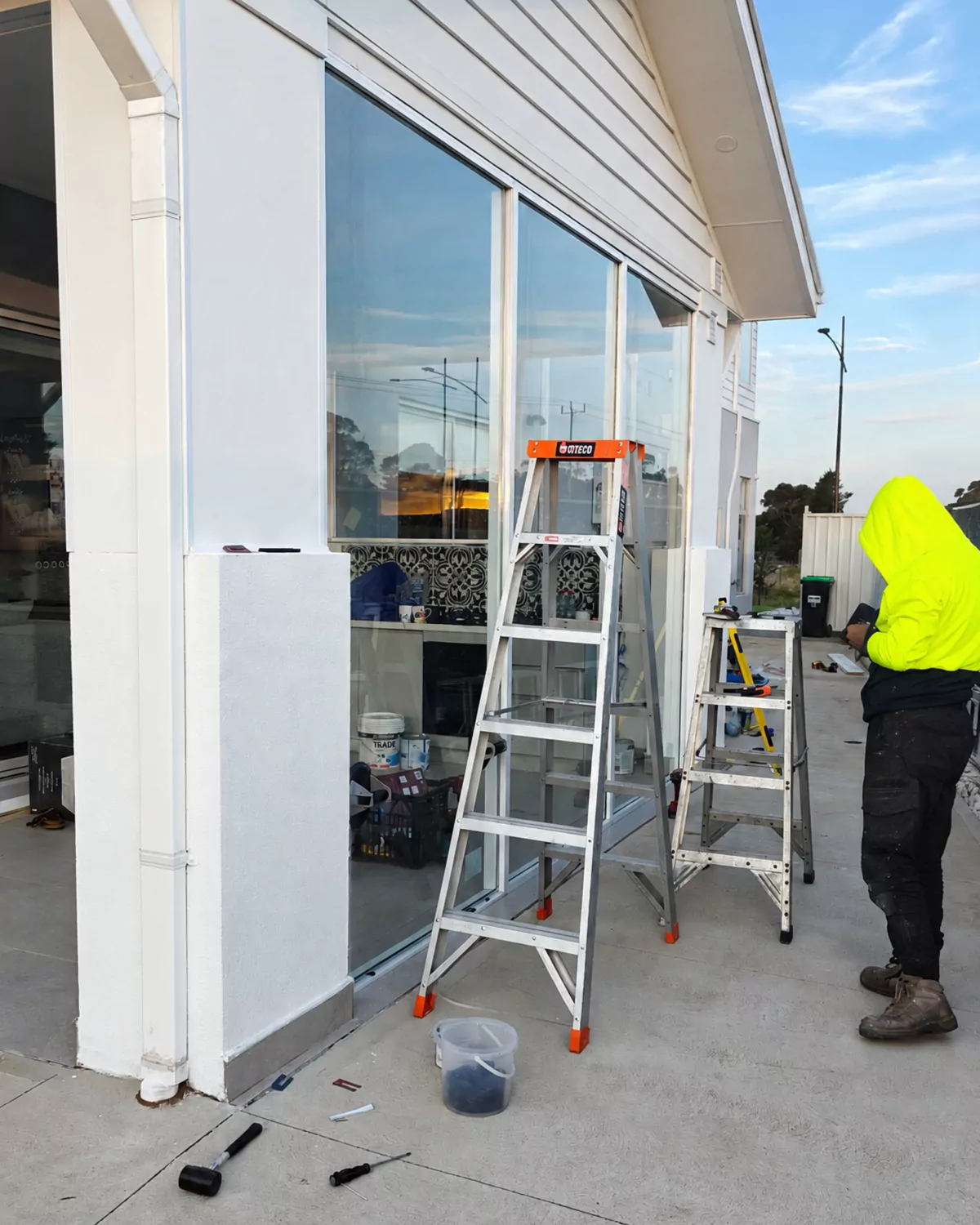
Overhead: laminated is the default
Glass in homes is covered by the National Construction Code's glazing provisions and the Australian Standard AS 1288 (glass in buildings, selection and installation). AS 1288 was revised in 2021, and sloped overhead glazing is one of the areas it covers in detail. The practical outcome for an alfresco roof: overhead glass is normally laminated. Toughened glass is allowed overhead only in limited cases, and in a double-glazed roof unit the inner pane is laminated.
The reason is simple. If a roof pane breaks, toughened glass falls as a shower of pieces; laminated glass stays up.
Walls and doors: toughened or laminated
For the walls, both are used:
- Toughened is common for sliding and stacking door panels and fixed walls: strong, and safe if it breaks.
- Laminated suits places where you want the pane to stay in the frame if it is struck, such as street-facing glass or a pane beside a pool, and it cuts more noise and UV.
Large panes and doors are also rated for wind. Windows and glazed doors must meet AS 2047, with a rating that matches your site's wind classification under AS 4055. A pane that suits a sheltered suburban backyard may not suit an exposed, elevated site, so the rating belongs on the quote.
Double glazing is a separate choice
Double glazing means two panes with a sealed gap between them. It keeps heat in and noise out and is chosen for comfort and energy rules, not safety. Each pane is still a safety glass where the standard requires one. If you'll heat the room most evenings, price it. See enclosed alfresco vs sunroom for when it's worth it.
What to check on a quote
When you compare quotes, the glass line should say, for the roof and for each wall:
- Type: laminated or toughened (and whether it's double glazed).
- Thickness, for example 6.38 mm laminated.
- Any tint or coating: toned, Low-E or plain clear.
- The wind rating of the doors and windows.
If a quote just says "glass", ask. Our alfresco enclosure cost guide has the full quote checklist, and our alfresco enclosure ideas show where each kind of glass goes.
We supply laminated, toughened, double-glazed, Low-E and toned glass. We list the glass for every panel on our written quotes, and price the job before we start. See our alfresco enclosures or ask for a quote.
Questions
Why is a glass roof laminated?
Because if overhead glass breaks, laminated glass stays in one piece, held together by its interlayer, instead of falling. The Australian glazing standard, AS 1288, makes laminated safety glass the normal choice for sloped overhead glazing.
Is toughened glass safe for alfresco walls?
Yes. Toughened glass is about four to five times stronger than ordinary glass of the same thickness and breaks into small, blunt pieces. It is a common safety glass for doors and wall panels.
What happens if laminated glass breaks?
It cracks but stays in the frame, held by the interlayer, so the opening stays closed until the pane is replaced.
Does laminated glass block UV?
Most of it. Manufacturers quote UV blocking from about 95% to over 99%, depending on the interlayer.
What wind rating do alfresco doors need?
Doors and windows are rated under AS 2047 for the wind conditions at your site, which are classified under AS 4055. Your glazier should state the rating on the quote.
Was this guide helpful?

We supply and install double-glazed aluminium windows and doors, alfresco enclosures and glass partitions, and repair timber windows across Melbourne from our base in Bundoora. 5.0 ★ on Google.
Keep reading
Related guides
Alfresco2 min read
Enclosing a townhouse alfresco or balcony: owners corporation approval in Victoria
How owners corporation approval works in Victoria when you want to enclose a townhouse balcony, courtyard or alfresco with glass, and what to send.
Alfresco3 min read
Enclosing an alfresco in a bushfire-prone area: BAL ratings explained
What a BAL rating means for the glass and frames when you enclose an alfresco in a Victorian Bushfire Prone Area, and what to check before you order.
Alfresco4 min read
Do you need a permit to enclose an alfresco in Victoria?
When enclosing an alfresco with glass needs a building permit in Victoria, when a planning permit applies too, and what to sort out before ordering glass.