
Glass roof, louvre roof or polycarbonate: which suits your alfresco?
Laminated glass, an opening louvre roof or polycarbonate over your alfresco? How they compare on light, rain, noise, cost and fitting glass walls below.
By Glassy Slide teamPublished 3 min read
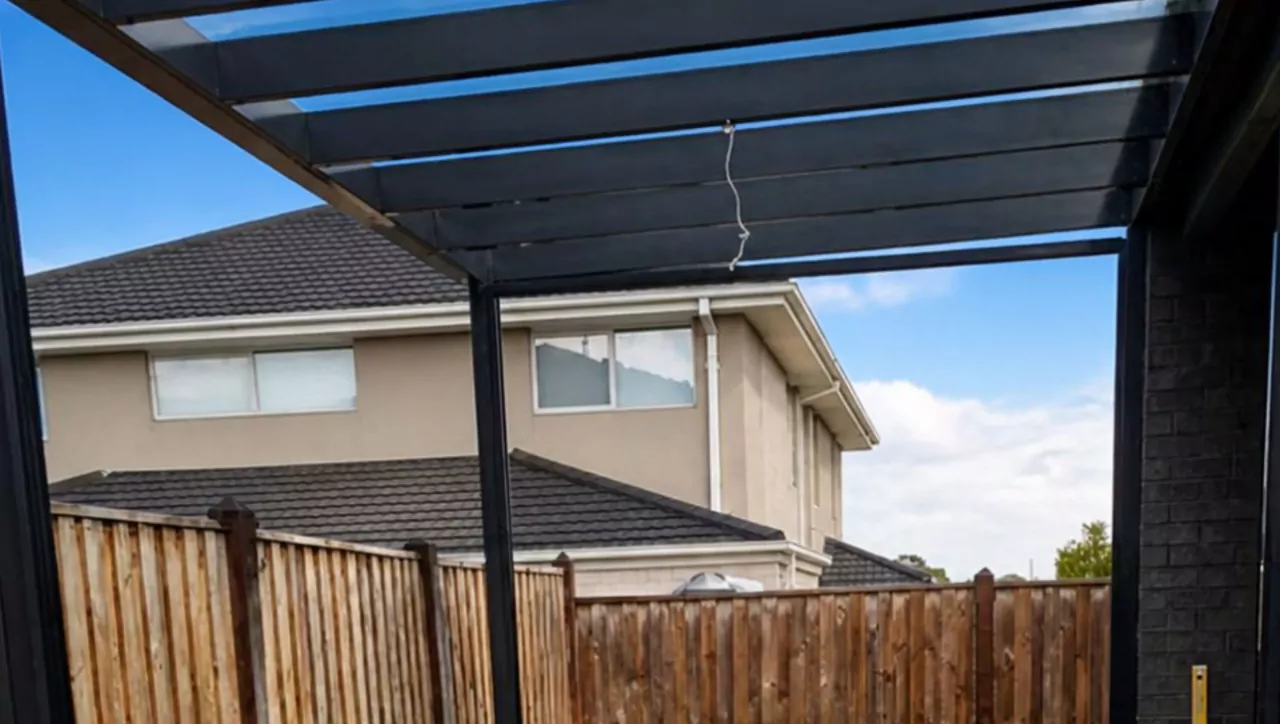
The roof decides how an alfresco feels more than anything else: how light the room behind stays, what rain sounds like, and whether glass walls can be added later. Here are the three common choices, compared by someone who has to fit glass walls under all of them.
The three roofs side by side
| Laminated glass | Opening louvre roof | Polycarbonate | |
|---|---|---|---|
| Light | Full daylight; sky stays visible | Full sun when open, shade when closed | Good light; tinted or opal options |
| Rain | Sheds water like a window | Sheds water through gutters when closed | Sheds water |
| Noise in rain | Quieter than sheet roofing | Can be loud on large metal blades | Can be loud |
| Look over time | Stays clear; needs cleaning | Moving parts need upkeep | Can scratch and discolour |
| With glass walls under it | Seals cleanly to glass walls | Needs careful edge detailing | Works, but fire and ageing limits |
| Typical published price | Quoted per job | About $900–$1,650 per m² | About $215–$350 per m² |
The louvre and polycarbonate figures are published Melbourne and Australian guide prices from 2026. We found no published installed price for a laminated glass roof: it depends on the span, the frame and the glass make-up, so it is quoted per job.
Laminated glass: light all year
A glass roof keeps the rain off without darkening the kitchen or living room behind it, which is why it suits an alfresco you plan to close in. Overhead, it is normally laminated safety glass: two sheets bonded with a plastic interlayer, so if it breaks the pieces stay stuck in place instead of falling. Laminated glass also blocks most UV; manufacturers quote figures from about 95% to over 99% depending on the product. We explain the safety rules in laminated vs toughened glass.
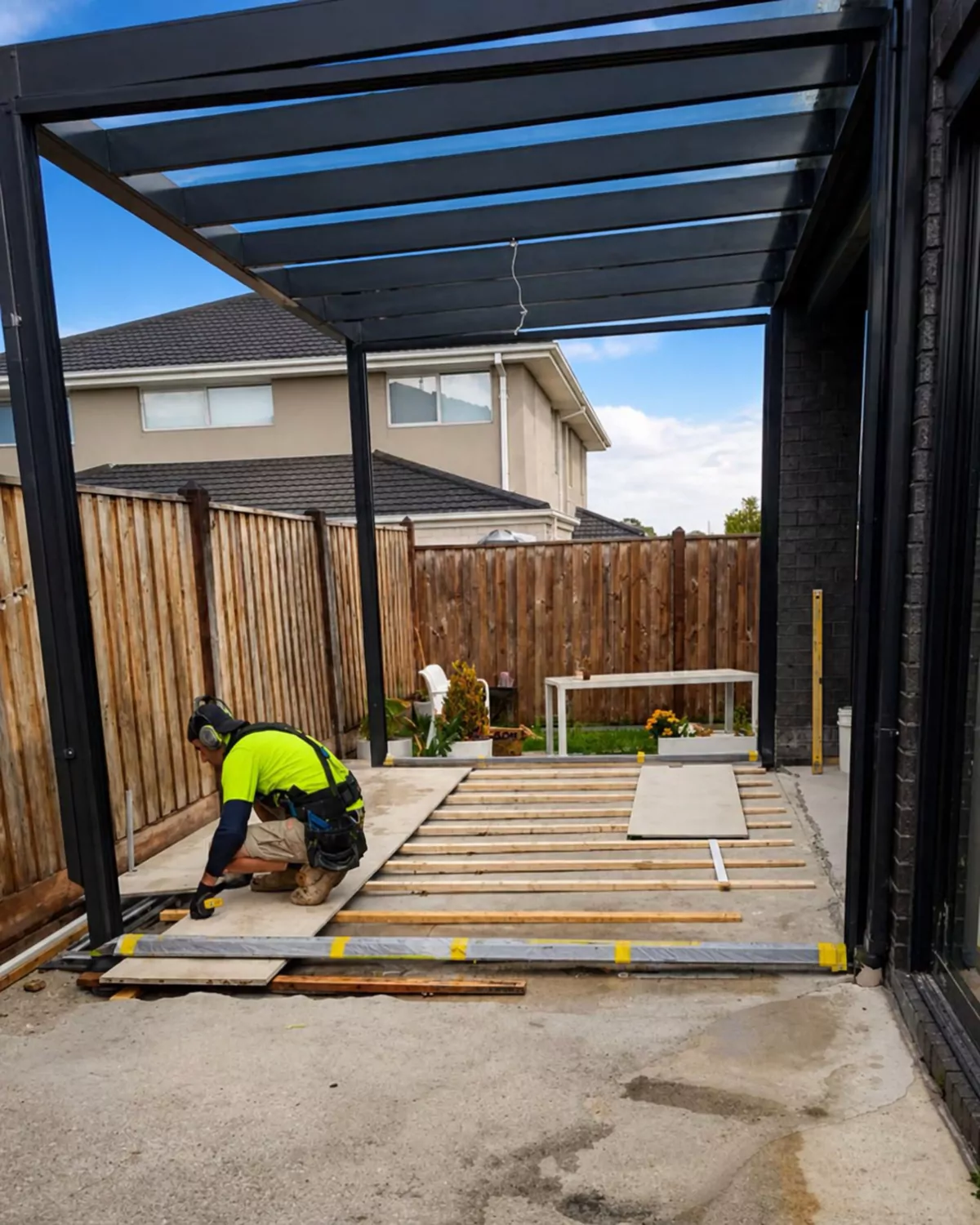
On a north- or west-facing alfresco, plan for summer heat: toned or Low-E glass, a shade sail or blind, and wall panels that open for a breeze. Our guide on whether a glass alfresco gets too hot or fogs up covers the options.
Louvre roof: sun or shade on demand
Opening louvres are the choice if you want full sun some days and shade on others. Published prices run from about $900 per m² for manual blades to about $1,650 per m² for insulated, motorised systems. Adding a motorised louvre roof to an alfresco can mean $18,000 to $36,000 or more. Once the blades can close and shed water, the roof is treated like a verandah roof for permits.
If you want glass walls underneath, plan the two together. The walls fix to the beams, and the louvre maker needs to show how the roof seals at its edges.
Polycarbonate: the budget roof
Polycarbonate sheeting is the lowest-cost way to keep rain off, at about $215 to $350 per m² published in Melbourne in 2026, more for insulated panels. It scratches more easily than glass, can yellow or cloud with age, and is louder in rain. In a fire, polycarbonate on an open pergola softens and drips, which matters if you live near bushland.
Which to choose
- You'll enclose the alfresco and use it all year: laminated glass. It keeps the light and seals cleanly to glass walls.
- You want shade control more than a closed room: a louvre roof, with walls planned in from the start.
- You need a low-cost rain cover for an open patio: polycarbonate, accepting its limits.
For layouts that combine a glass roof with sliding walls, see our alfresco enclosure ideas, and for prices, the alfresco enclosure cost guide.
We build glass roofs and glass walls in aluminium frames. We measure on site, quote in writing and price the job before we start. See our alfresco enclosures or ask for a quote.
Questions
Is a glass roof hot in summer?
It lets in more light and heat than a solid roof. On a north- or west-facing alfresco, ask about toned or Low-E glass, shade and ventilation. Opening wall panels let the heat out on warm days.
Do louvre roofs leak?
Closed louvres shed water through built-in gutters, but they are not as watertight as a fixed roof in driving rain or when the gutters are blocked. If you plan glass walls underneath, ask the louvre maker how the roof seals at the edges.
Is polycarbonate cheaper than glass?
Usually, yes. Polycarbonate is lighter and cheaper, but it scratches, can discolour with age and is noisier in rain. Glass costs more, stays clear and suits a room you plan to enclose.
Does a louvre roof need a permit?
Generally yes. Once a roof can close and shed water it is treated like a verandah roof, and verandahs need a building permit in Victoria.
Was this guide helpful?

We supply and install double-glazed aluminium windows and doors, alfresco enclosures and glass partitions, and repair timber windows across Melbourne from our base in Bundoora. 5.0 ★ on Google.
Keep reading
Related guides
Alfresco2 min read
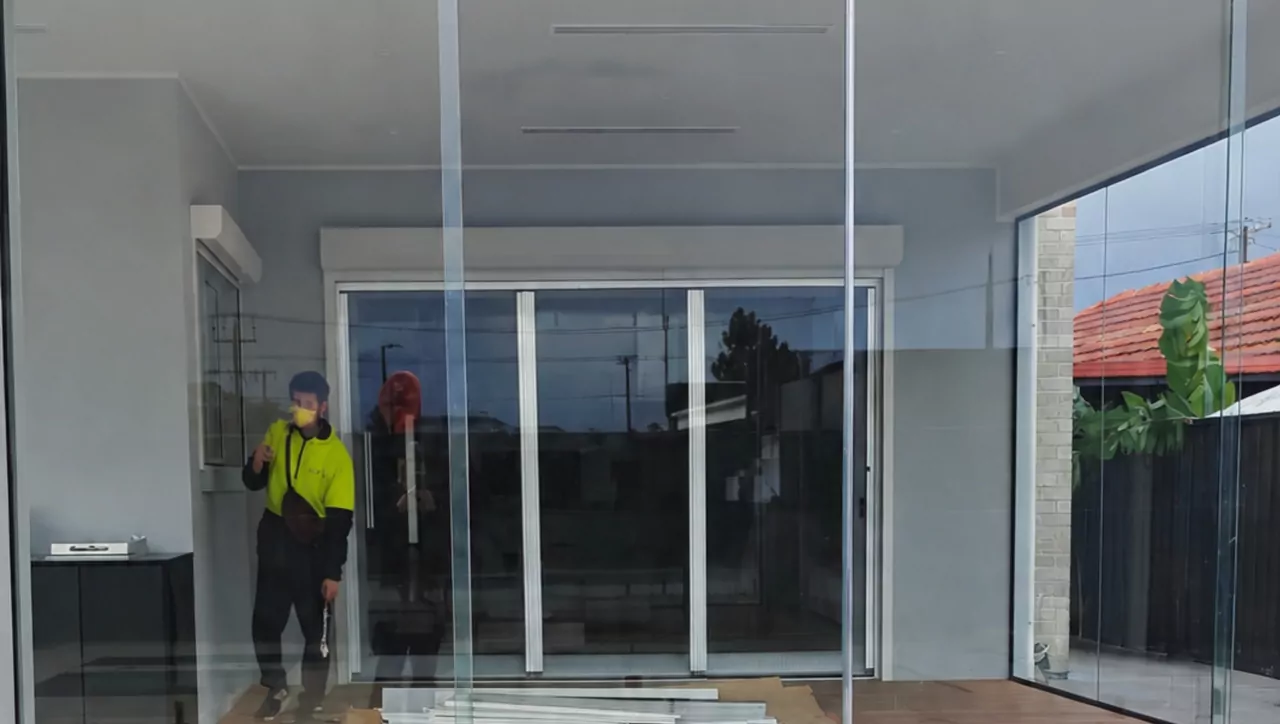
Enclosing a townhouse alfresco or balcony: owners corporation approval in Victoria
How owners corporation approval works in Victoria when you want to enclose a townhouse balcony, courtyard or alfresco with glass, and what to send.
Alfresco3 min read
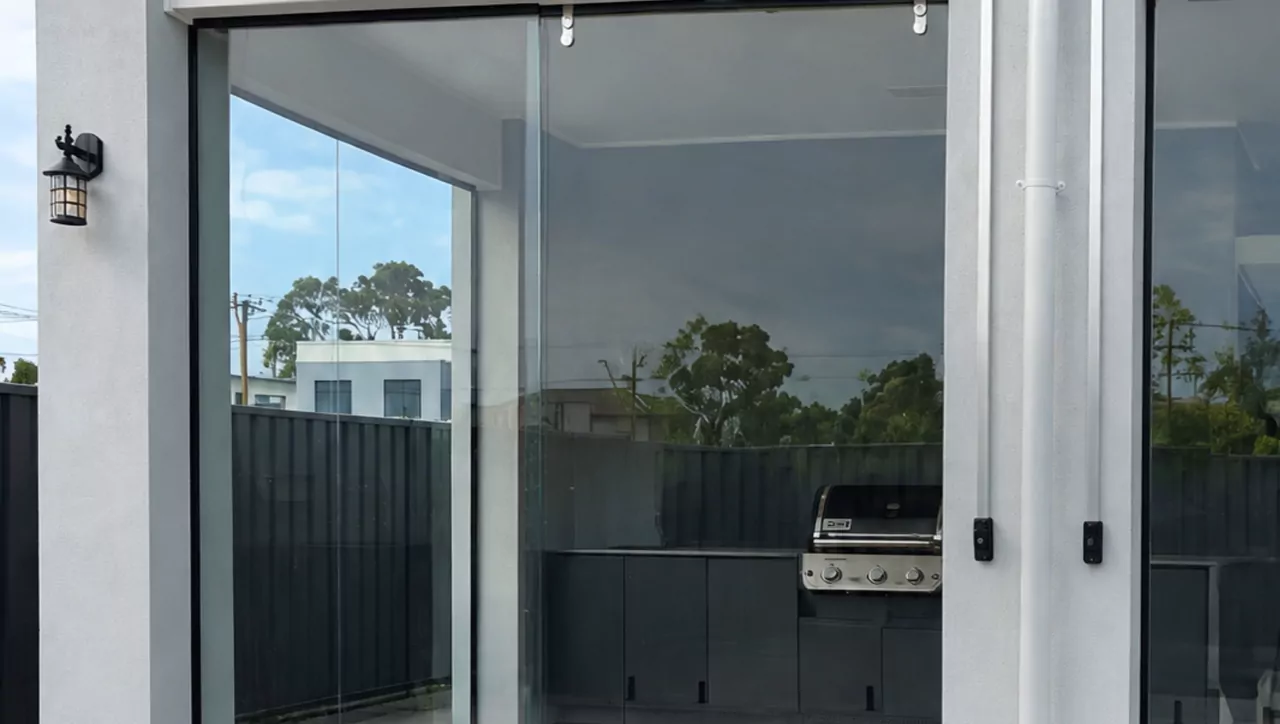
Enclosing an alfresco in a bushfire-prone area: BAL ratings explained
What a BAL rating means for the glass and frames when you enclose an alfresco in a Victorian Bushfire Prone Area, and what to check before you order.
Alfresco4 min read
Do you need a permit to enclose an alfresco in Victoria?
When enclosing an alfresco with glass needs a building permit in Victoria, when a planning permit applies too, and what to sort out before ordering glass.