
Automatic sliding doors for a small shop: cost, rules and retrofitting
What an automatic sliding door for a small Melbourne shop involves: market costs, fitting into an existing front, exit and standards questions, and servicing.
By Glassy Slide teamPublished 3 min read
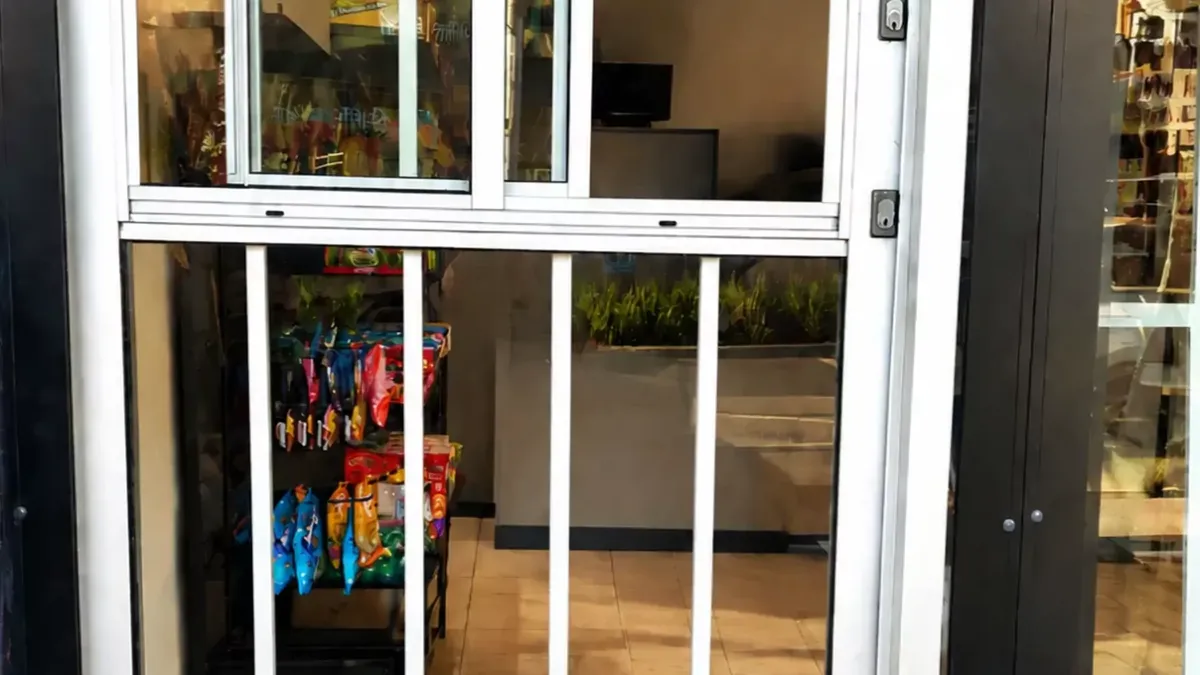
An automatic door suits a small shop that has prams, trolleys, deliveries or customers with full hands. It also adds moving parts, power and sensors to your front. Here's what is involved, what it costs on published market figures and what to check before you choose one.
Why small shops fit them
An automatic sliding door opens without a push, stays clear of the footpath because it slides rather than swings, and can be left unlocked in trading hours without a door held open. It suits pharmacies, cafes, clinics, convenience stores and anywhere the entry is busy or has to be easy for everyone.
What it costs
Published installer guides put a commercial automatic sliding door at roughly $5,000 to $20,000 or more installed, depending on size, operator and sensors (Action Auto Door; Digital Home Systems).
These are other companies' published market figures from 2025 and 2026, not Glassy Slide prices. We found no Melbourne price for a single door in a small shop, so treat the range as a sense of scale.
What moves the price: the width and height of the opening, the glass, the operator and sensors, whether the existing frame can be kept, power and wiring, and after-hours work. Our shopfront cost guide covers the rest of the front. We measure the opening and quote in writing, with the door, the glass and the work listed.
Fitting one into an existing front
A retrofit starts with what is already there:
- The opening and frame. An operator and track need a frame that is square and strong enough, and room above the door for the track.
- The floor. A sliding door runs on a track, and the threshold has to suit the people using it.
- Power. The operator needs a supply nearby.
- The glass. The panels are safety glass, selected for each opening. If a panel is damaged we make the opening safe first, then fit new glass (broken shop glass).
- Sensors and safety devices. These are set up for the entry, and tested before we leave.
Sometimes the old frame and door come out along with the old front; see replacing an old shopfront. For a new front, compare frameless and aluminium-framed shopfronts.
Exits and the standards
Two things sit behind automatic doors, and neither is a design choice.
Power-operated doors in a required exit. The National Construction Code has rules about how a power-operated door in a required exit opens by hand, and what it does on power failure or in a fire alarm. Which rules apply depends on whether your door is part of a required exit, and your registered building surveyor decides.
AS 5007. AS 5007 is the Australian standard for powered doors for pedestrian access and egress. AS 5007-2007 was reconfirmed in 2018, and it covers design, testing and commissioning of powered pedestrian doors, including protective devices (Standards Australia). Whether it is called up by a requirement for your building is a question for your surveyor. Whoever supplies your door should be able to tell you how it is tested and commissioned.
Servicing and repair
An automatic door is used all day, so it wears. Sensors drift, rollers and tracks collect grit, locks lose their adjustment, and the speed and timing change. A regular service catches this early. We service and repair automatic doors, including doors we didn't install: send us a short video of the door opening and closing on WhatsApp, with a photo of any label on it.
Permits
Like-for-like replacement is often exempt from a building permit, but a new opening, structural changes and work in a heritage area usually need one. See shopfront permits in Victoria.
Talk to us about an automatic door
We supply, install, service and repair automatic sliding doors for shops, clinics, offices and industrial sites across Melbourne, and we measure on site and quote in writing. See automatic sliding doors, shopfronts and entry doors or ask for a quote.
Questions
How much does an automatic sliding door cost for a small shop?
Published installer guides from 2025 and 2026 put a commercial automatic sliding door at roughly $5,000 to $20,000 or more installed, depending on size, operator and sensors. These are other companies' market figures, not our prices. We measure the opening and quote in writing.
Can an automatic door be fitted into my existing shopfront?
Often, yes. The existing frame, the opening size, the floor, the power supply and the glass all decide it, so the opening has to be looked at on site. Sometimes the frame or the door needs changing along with the operator.
What is AS 5007?
AS 5007 is the Australian standard for powered doors for pedestrian access and egress. AS 5007-2007 was reconfirmed in 2018. It deals with design, testing and commissioning of powered pedestrian doors, including protective devices.
Does an automatic door still work in a power failure?
It depends on the door and where it sits. Power-operated doors in a required exit have rules about opening by hand and on power failure, and your building surveyor decides what applies to your shop. Ask before you choose a door.
Do automatic doors need servicing?
Yes. Sensors, rollers, tracks, locks and the door's speed and timing wear and drift, and a regular check catches problems before the door stops working. We service automatic doors, including ones we didn't install.
Do I need a permit to fit an automatic door?
It depends on the work. Like-for-like replacement is often exempt from a building permit, but a new opening, a structural change or work in a heritage area usually needs one. Your registered building surveyor and council decide.
Was this guide helpful?

We supply and install double-glazed aluminium windows and doors, alfresco enclosures and glass partitions, and repair timber windows across Melbourne from our base in Bundoora. 5.0 ★ on Google.
Keep reading
Related guides
Shopfronts3 min read
Glass shop doors: safety glass and the markings they need
Do glass shop doors need safety glass and visible markings? How AS 1288 and AS 1428.1 fit together, what to ask for, and why a logo is not always a marking.
Shopfronts3 min read
Frosting, logos and privacy film on shop glass: what to know first
Frosted film, printed logos and privacy film on shop windows and doors in Melbourne: the options, what to check with the glass, your lease and council first.
Shopfronts3 min read
Frameless glass or aluminium-framed shopfront: which suits your shop?
Frameless glass or an aluminium-framed shopfront? How they compare for look, doors, security, repairs and cost, and which suits a Melbourne shop.