
uPVC or thermally broken aluminium windows: an honest Melbourne comparison
uPVC or thermally broken aluminium? What a thermal break does, how to compare whole-window ratings, and where each frame suits a Melbourne home.
By Glassy Slide teamPublished 4 min read
If you are buying windows in Melbourne, you will find that most of the comparison pages are written by someone who sells uPVC. We fit aluminium. That is a bias too, so here is the comparison with the bias declared, and with the point uPVC sellers get right stated first.
| Question | uPVC | Standard aluminium | Thermally broken aluminium |
|---|---|---|---|
| Frame insulation | Generally good; verify the complete product | Conductive unless engineered otherwise | Insulating connections reduce frame conduction |
| Large openings and sightlines | Check reinforcement, size limits and profile dimensions | Check system limits and visible profile dimensions | Check system limits and visible profile dimensions |
| Fair comparison | Exact whole-window U-value and SHGC | Exact whole-window U-value and SHGC | Exact whole-window U-value and SHGC |
Also compare opening style, size, glazing, seals and installation.
Where uPVC is ahead
A standard aluminium frame is a poor insulator. Sanctuary magazine, published by the not-for-profit ReNew, puts it bluntly: "aluminium is a great conductor of heat and so provides no insulation" (Sanctuary). A uPVC frame holds heat better than a standard aluminium one. If a bedroom window is cold and the frame is the weak link, uPVC is a fair choice for that window, and we would rather say so than pretend otherwise.
What a thermal break changes
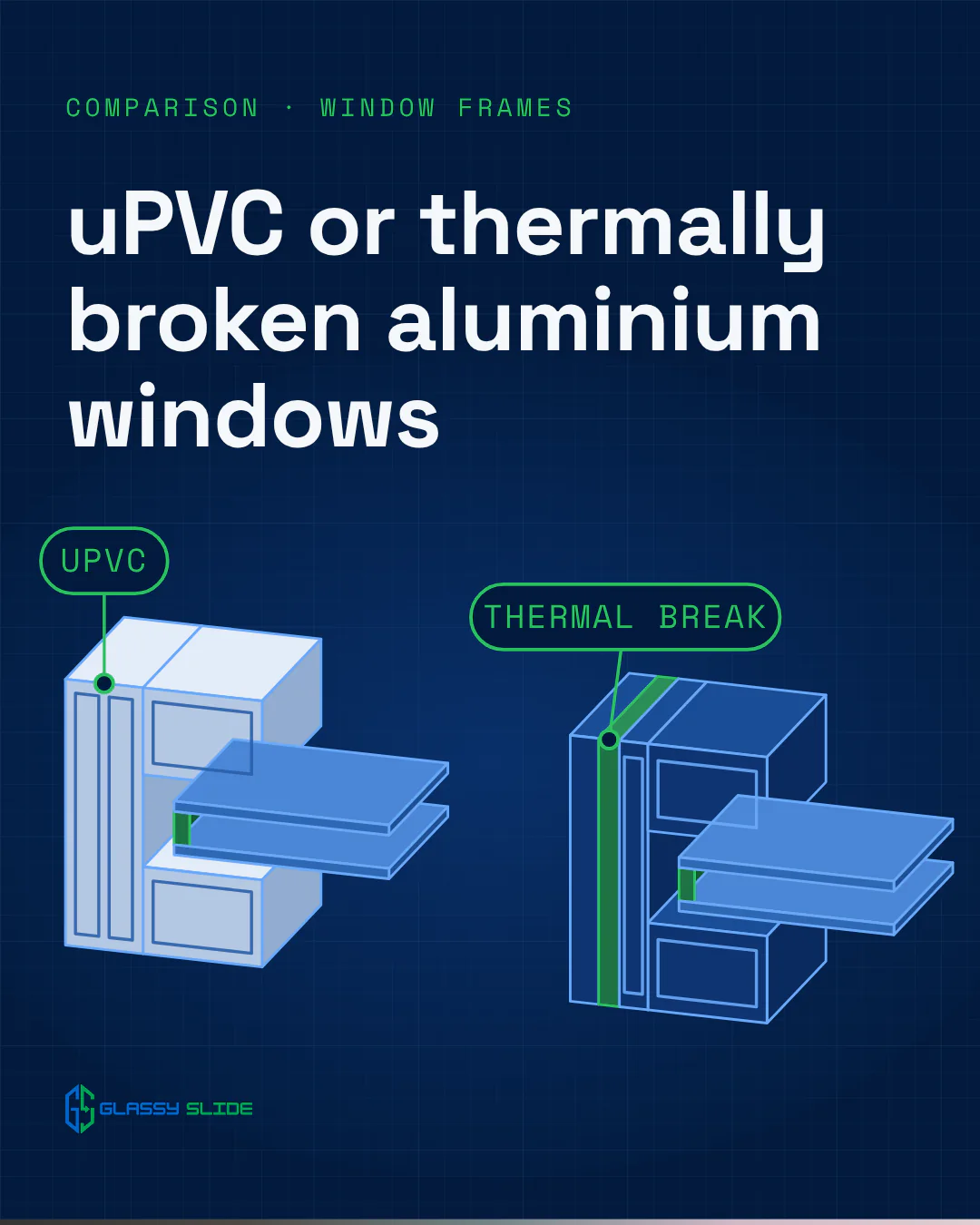
A thermally broken aluminium frame uses separate inner and outer aluminium sections joined by a low-conductivity structural material. This reduces conduction through the frame. Performance still depends on the exact frame, glass and window configuration, so ask for the whole-window rating for the product quoted (Your Home).

A standard profile has a continuous metal connection. In the thermally broken construction, low-conductivity structural bridges join separate metal sections. From 3–6 seconds the bridges move into position for explanation; from 6–12 seconds the markers illustrate indoor-to-outdoor heat flow in winter. Heat can still pass through both profiles. Marker speed is not a measured heat-flow rate. These simplified profiles are not installation details.
uPVC can also provide strong thermal performance. Compare the exact products rather than assuming the frame material determines the result.
Where aluminium suits
Aluminium systems can provide slim sightlines and suit large glazed openings. Check the quoted system’s permitted panel sizes, glass weight and performance ratings. A thermally broken aluminium option may suit a wide sliding or stacking door, while a well-specified uPVC system can also provide strong thermal performance. If you already have aluminium frames and the question is whether to keep them, see can you double glaze existing aluminium windows.
Compare the whole window, not the frame
This is the single most useful thing in this post. A window's performance comes from the frame and the glass together. Sanctuary explains that the Window Energy Rating Scheme (WERS) gives "comparative ratings for frames and glass combined in a functioning window or door", with star ratings based on the window's U-value and solar heat gain coefficient (SHGC), for heating and cooling across three climate types (Sanctuary).
In practice:
- Ask for the whole-window U-value for the exact frame and glass in the quote. The lower the U-value, the better the window resists heat flow.
- Ask for the SHGC as well. It tells you how much solar heat comes through. Lower solar gain can help exposed western glazing, while useful winter sun may call for a different specification. Consider orientation and shading; lower SHGC is not universally better.
- Be careful with frame-only tables. A frame figure is not a window figure, and two sellers quoting different kinds of number are not comparing the same thing.
- Ask for the rating on the product quoted, not on a similar one.
AGWA/WERS confirms that these are whole-window values. Ask for the rating of the exact system being quoted, rather than treating an illustrative U-value range as a product limit.
A few honest limits
We have not published a U-value for our windows, and we are not going to quote lifespan claims for either material, because we did not find independent durability data that we trust. If a supplier gives you a durability figure, ask where it comes from.
Both the glazing and frame affect whole-window performance. Installation and air leakage also matter. A double-glazed unit with the right glass type can improve a window in ways a frame choice cannot, which is the point of our quieter and warmer windows guide. And a frame does not fix a draughty install, so fit matters as much as the material.
So which should you choose?
Choose by the opening and the quoted system. uPVC is a fair option where insulation is a priority. Thermally broken aluminium may suit large sliding or stacking doors and slim sightlines. Check permitted sizes and performance for either material, get the whole-window rating in writing and compare like with like.
For what these jobs typically cost in Melbourne and what moves the price, see our double glazing cost guide. If you are weighing up a discount, our rebates guide covers what the Victorian Energy Upgrades program does and does not cover.
Our double glazing and sliding doors page covers the aluminium options we work with and how we quote.
Considering aluminium windows or sliding doors? Send us photos and approximate opening sizes to discuss the available options and request a written quote.
Questions
Are uPVC windows better than aluminium?
uPVC frames generally provide better insulation than standard aluminium. Thermally broken aluminium reduces conduction through the frame. Compare the exact whole-window U-value and SHGC, together with opening style, panel size, sightlines, seals and installation.
What is a thermal break?
A thermally broken aluminium frame has separate inner and outer metal sections joined by a low-conductivity structural material. This reduces conduction through the frame; it does not eliminate heat flow.
What U-value should I ask for?
Ask for the U-value of the whole window, glass and frame together, for the exact product quoted. A lower U-value means better insulation. Ask for the SHGC too, and check the requirements for your room and project. A generic range is not a substitute for the rating of the exact product.
Which is better for big sliding doors?
Aluminium systems can suit large glazed openings and slim sightlines. Check the quoted system’s permitted panel sizes, glass weight and performance ratings. Compare any uPVC alternative against the same requirements. We fit aluminium.
Do aluminium windows sweat?
Condensation forms when warm, moist air meets a cold surface, so it depends on humidity and ventilation as well as the frame. Because standard aluminium conducts heat and cold, it is a cold surface, and a thermal break or better glass can help. No frame choice is a guarantee. Our guide to heat and condensation in glass alfresco rooms explains the same principle.
Was this guide helpful?

We supply and install double-glazed aluminium windows and doors, alfresco enclosures and glass partitions, and repair timber windows across Melbourne from our base in Bundoora. 5.0 ★ on Google.
Keep reading
Related guides
Double glazing5 min read
Double glazing rebates in Victoria (2026): what the VEU discount really covers
Is there a double glazing rebate in Victoria? What the Victorian Energy Upgrades discount covers, the official figures, who can claim it and what to ask.
Double glazing5 min read
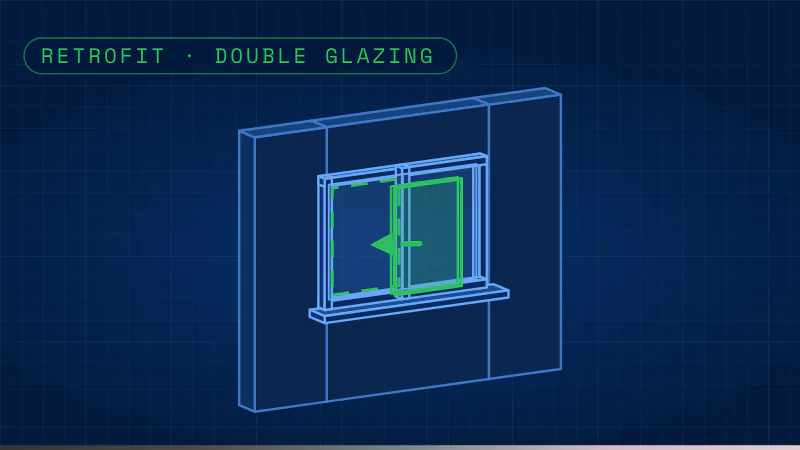
Can you double glaze existing aluminium windows? Retrofit, secondary glazing or replace
Can your old aluminium windows take double glazing? Retrofit, secondary glazing and full replacement compared, with a checklist for your frames.
Repairs3 min read
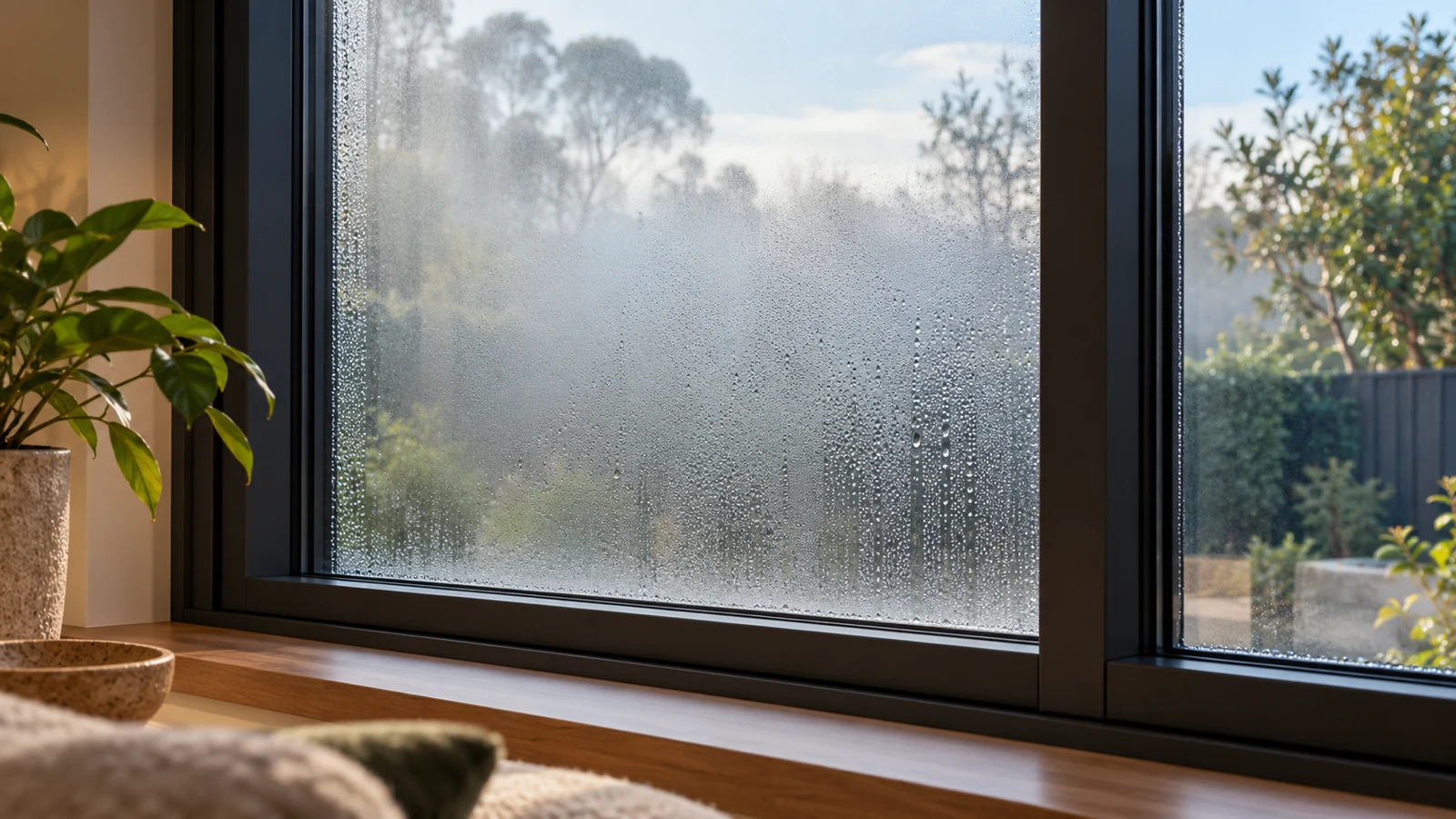
Fog between double-glazed panes: replace the unit, not the window
Mist or fog trapped between double-glazed panes means the unit's seal has failed. Why it can't be wiped away, why drilling is a stopgap, and what the fix is.