
Accessible shop entrances: when a new door triggers an upgrade
When must a new shop door or shopfront be accessible? How the Premises Standards, the affected part and the tenant concession work, in plain English.
By Glassy Slide teamPublished 4 min read
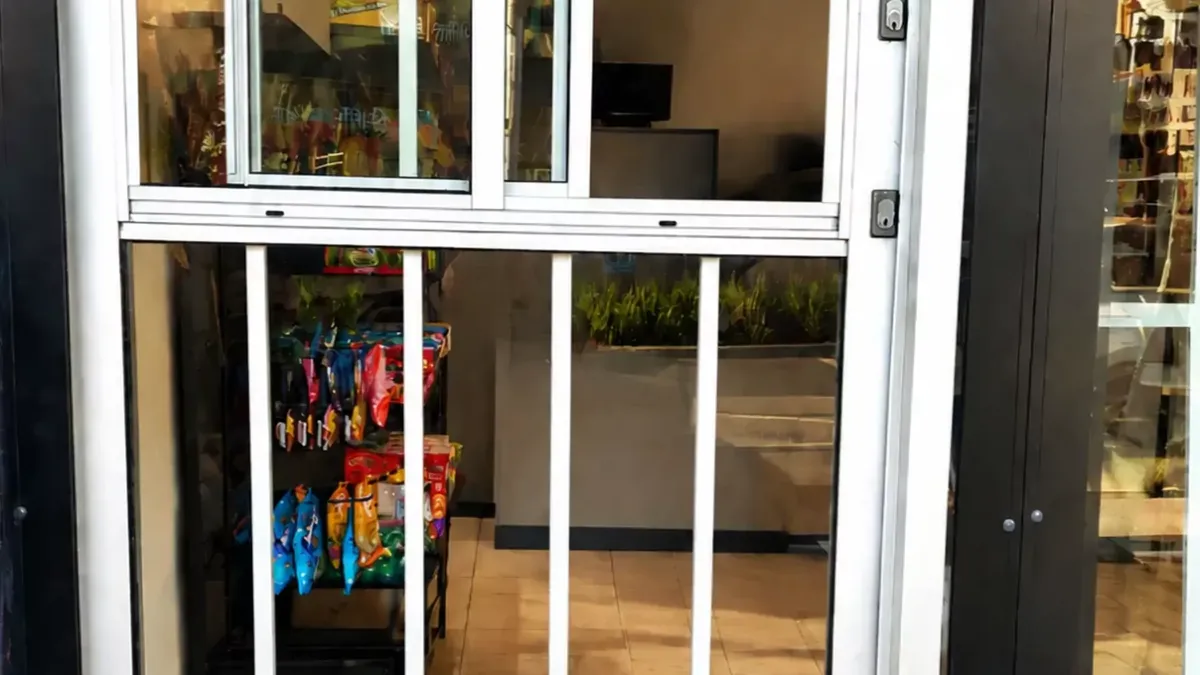
If you are putting in a new shop door or a new shopfront, one question comes up late and costs money when it does: does the entrance now have to be accessible? Here is how the rules work in plain words.
This is general guidance only. The registered building surveyor decides what your shopfront needs, not the glazier, and an access consultant can advise on the detail.
Why a new door can trigger it
The Disability (Access to Premises – Buildings) Standards 2010, usually called the Premises Standards, apply to a "new part" of a building. That is an extension or a modified part where a building approval application is made on or after 1 May 2011 (Premises Standards, legislation.gov.au, clause 2.1).
So the first test is whether your work needs a building approval at all. Like-for-like repair or replacement often does not. A new opening, a changed opening or structural change usually does. Our guide to shopfront permits in Victoria covers that step.
The affected part
When there is a new part in an existing building, the Standards also reach the "affected part". That is the principal pedestrian entrance of the building, and the parts of the building needed to make a continuous accessible path from that entrance to the new work (clause 2.1(5)).
For a shop on a strip, that can mean the front door is part of the conversation even when you only meant to change something inside. For a shop inside a larger building, it can mean the building's main entrance and the way through to your tenancy.
What tenants should know
The Standards include a concession for lessees. Where the lessee of a new part applies for the approval, the building certifier, the developer and the building manager do not have to make sure the affected part complies. The concession does not apply if the building is leased to only one person (clause 4.3).
A council fact sheet gives the practical version for a shop in a shared building: any new works to your own space must comply, but you do not have to upgrade the walkway from the centre's front entrance (Hobsons Bay City Council). The same fact sheet notes that the Disability Discrimination Act 1992 still applies to businesses, so accessible access is worth planning even where the Standards do not strictly require an upgrade.
Whether your lease or your landlord changes any of this is a question for the lease and the surveyor, not for this guide.
What the door itself is judged on
Doorways are covered by AS 1428.1, which deals with things like clear openings, luminance contrast and handle design (Standards Australia). We don't quote dimensions here. They are set in the standard, they depend on the edition and on the door, and your surveyor or access consultant can give you the figures for your entrance.
The edition matters. The Premises Standards were amended in November 2024 to refer to the 2021 edition of AS 1428.1, after the earlier 2009 edition (Australian Building Codes Board). Which edition applies to your job is something to confirm with the surveyor when you apply.
Glass, markings and automatic doors
Three things often get mixed up with accessibility:
- Safety glass and visible glass. These are separate from accessibility, but they sit on the same door. See glass shop doors: safety glass and the markings they need.
- Frames and fittings. A frameless door and an aluminium door have different hardware, which can change what is possible at the threshold and handle. See frameless or aluminium shopfront.
- Automatic doors. A powered door can make an entrance easier to use, but the door is only one part of the entrance. See automatic sliding doors for a small shop.
What to ask before you order
- Does my work need a building approval, or is it like-for-like?
- If it does, is the main entrance an affected part?
- Does the tenant concession apply to my lease?
- Which edition of AS 1428.1 does the surveyor expect?
- Can the quote name the glass type, the door type and the hardware for the entrance?
Our shopfront cost guide sets out what moves the price, and a change to the entrance can be one of those things.
Talk to us about your entrance
We supply and fit aluminium-framed and frameless shopfronts and entry doors across Melbourne, supply, install, service and repair automatic sliding doors, and make broken glass safe 24/7 on 0410 107 794. We measure on site and quote in writing. See shopfronts and entry doors, automatic sliding doors or ask for a shopfront quote.
Questions
Does a new shop door have to be accessible?
It can be. If the work needs a building approval, the new part of the building has to meet the Premises Standards, and the main entrance can be pulled in as well. If the work is a like-for-like repair that needs no approval, the Standards are not triggered by it. The registered building surveyor decides which applies.
What is the affected part?
In the Premises Standards it is the principal pedestrian entrance of an existing building that contains a new part, plus the parts of the building needed to give a continuous accessible path from that entrance to the new part.
Does a tenant have to upgrade the main entrance?
Not always. The Standards include a concession where the lessee of a new part applies for the approval. It does not apply when the whole building is leased to one person. Check your lease and ask the surveyor before you commit.
Do I need an access consultant?
Often it is worth one conversation. An access consultant or the building surveyor can tell you which parts of your entrance are affected and which edition of AS 1428.1 applies.
Does safety glass or door marking make an entrance accessible?
No. They are separate questions. Safety glass and visible glass are about people not being hurt or walking into glass. Accessibility covers things like the doorway, controls, handles and contrast. Both can apply to the same door.
Was this guide helpful?

We supply and install double-glazed aluminium windows and doors, alfresco enclosures and glass partitions, and repair timber windows across Melbourne from our base in Bundoora. 5.0 ★ on Google.
Keep reading
Related guides
Shopfronts3 min read
Automatic sliding doors for a small shop: cost, rules and retrofitting
What an automatic sliding door for a small Melbourne shop involves: market costs, fitting into an existing front, exit and standards questions, and servicing.
Shopfronts3 min read
Glass shop doors: safety glass and the markings they need
Do glass shop doors need safety glass and visible markings? How AS 1288 and AS 1428.1 fit together, what to ask for, and why a logo is not always a marking.
Shopfronts3 min read
Frosting, logos and privacy film on shop glass: what to know first
Frosted film, printed logos and privacy film on shop windows and doors in Melbourne: the options, what to check with the glass, your lease and council first.