
Double-glazed sliding doors in Melbourne: your options and what they cost
Retrofit double glazing or a new aluminium sliding door? The options for a Melbourne home, what each costs, and what a sliding door quote should list.
By Glassy Slide teamPublished 4 min read
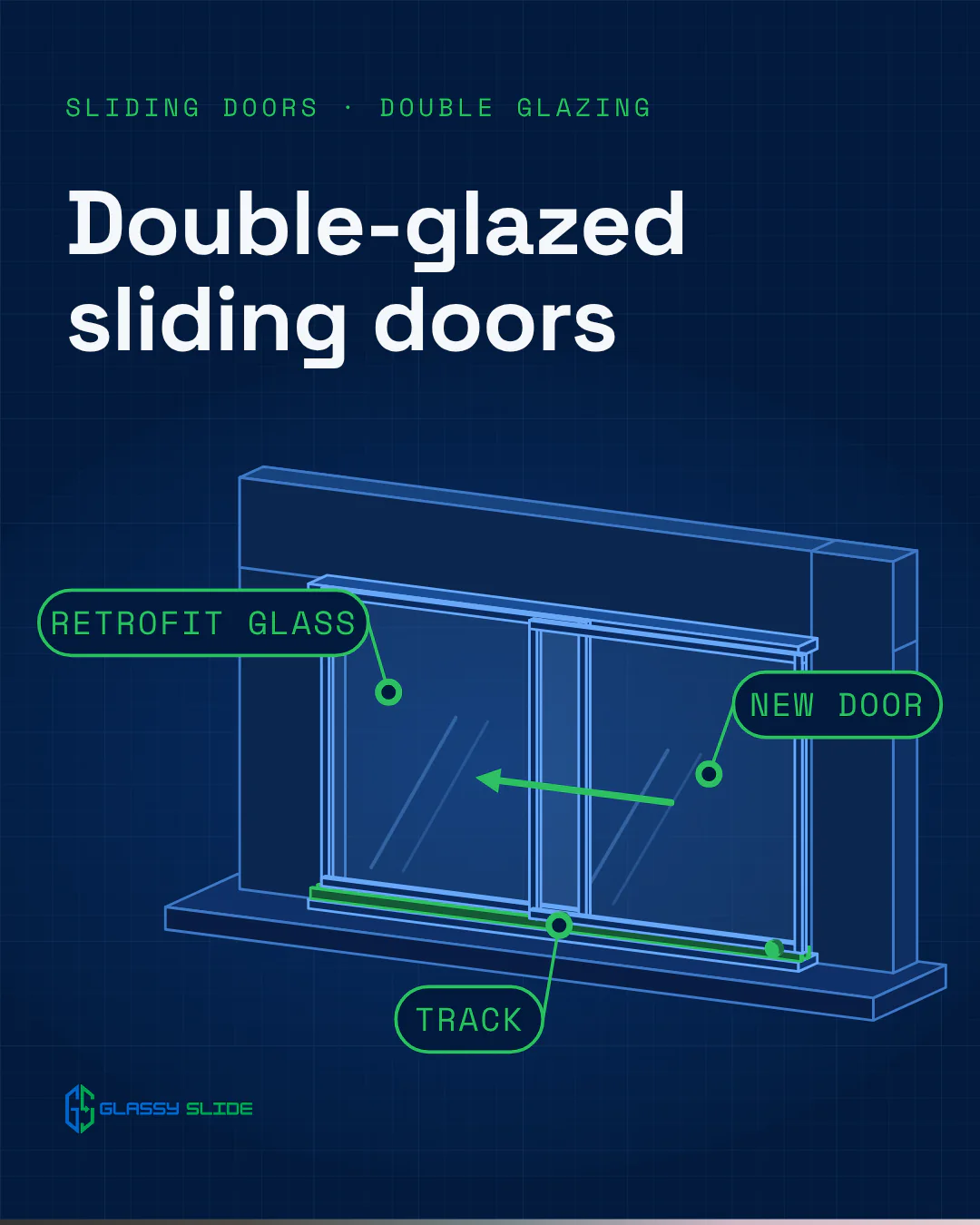
A sliding door is usually one of the largest pieces of glass in a house, and it is a place where there is a real choice between upgrading what you have and replacing it. This guide sets out the two ways to double glaze a sliding door, what each is likely to cost, and what a quote should tell you.
What this adds to our other guides
Our double glazing cost guide covers retrofit against new for windows and doors together. This guide is about the sliding door only: the weight of the glass on the rollers and track, the choices in the glass, and the questions to ask. If the door is simply stiff or cracked, our guides to a sliding door that is hard to open and to replacing the glass, the rollers or the whole door come first. The doors for an enclosed outdoor area are covered in sliding, stacking, frameless or bi-fold doors for an alfresco.
The two ways to double glaze a sliding door
| Retrofit into the existing door | New double-glazed aluminium door | |
|---|---|---|
| What changes | The single pane is replaced with a sealed double-glazed unit, in the frame you already have | The whole door is replaced: frame, track, rollers, seals, locks and glass |
| Our guide figure | $600 to $1,800 per opening | $2,300 to $3,500 installed |
| Best when | The frame is sound and square, the track is true and the rollers can carry the extra weight | The door is old, worn, corroded or draughty, or you want a different layout |
| What to check first | Frame depth and condition, rollers and track | What the new door's frame and glass include |
Guide figures, not a quote. They are the ranges on our sliding doors and double glazing page, and the size and glass move the price within them.
Why weight matters on a sliding door
A sealed double-glazed unit is two panes with a gap and a spacer, so it is heavier than the single pane it replaces. On a sliding door that weight sits on two small rollers running on a track, and it is lifted and pushed every time the door opens. That is why a retrofit is not only a glass job: the sash must be able to hold the unit, and the rollers and track must carry it without dragging. If they are worn, it can be better to fit new ones with the glass, or to replace the door. We look at all three before we recommend anything.
Choosing the glass
Double glazing is not one product. The choices are:
- Plain double glazing. Two clear panes with a sealed gap.
- Low-E. A coating on one pane to reduce heat transfer. Useful where heat or cold through the glass is the problem.
- Toned glass. Tinted glass that cuts glare and some heat from the sun.
- Laminated. A plastic interlayer between two sheets, used where the door must hold together when broken, or for extra noise reduction.
- Toughened. Heat-treated glass that breaks into small pieces.
We supply all of these in double glazed units. Glass in a door is selected per opening, with AS 1288 as one requirement, so the type is confirmed when we measure, not decided from a price list. We do not give figures for heat or noise reduction here, because they depend on the whole door: the glass, the frame, the seals and the fit. If the door faces west, our guide to hot west-facing windows covers shade, toned glass and Low-E.
What else changes the price
- Size. Glass is priced by area, and a wide sliding door costs far more than a small window.
- Number of leaves. Two-leaf and three-leaf doors, and fixed panels beside them, change the frame and the glass.
- The frame. A frame that can stay costs less than one that must be replaced.
- Glass type. Low-E, toned and laminated glass cost more than plain glass.
- Locks, screens and finishes. Security screens, insect screens, locks and frame colour all add to the quote.
- Making good. Around a new door, flashings and sealing can be a separate line, so check whether they are in.
What a sliding door quote should list
Two quotes for "a new sliding door" can be very different jobs. Ask each to state:
- the size of the opening and the number of leaves;
- whether it is retrofit glass or a new door, and what is replaced with it: rollers, track, seals, locks;
- the glass in each leaf, including double glazing, Low-E, toned, laminated or toughened;
- the frame material, which for us is aluminium, and the colour;
- screens and locks;
- whether the old door is removed and taken away, and the making good around the opening;
- the timing, and whether GST is shown.
A smaller total can be a thinner specification, so compare what is included before you compare the number. The same method works for window quotes.
Approval and rebates
Whether you need approval depends on the property. A heritage overlay, owners corporation rules or a bushfire area can all affect door work, and your council or a registered building surveyor decides what applies, so check first: see heritage overlay windows. Victorian rebates change over time, and our rebates guide says what to check. If the door has a sealed unit that has already failed and fogged, the fix is covered in fog between double-glazed panes.
Ask us for a written quote
We work out whether retrofit or a new door is the better fit for your opening and how you use it, then price it fairly, in writing, before any work starts. We supply and fit aluminium sliding doors and double glazing across Melbourne, and we do not fit uPVC. We measure on site and list the door, the glass and the extras in the quote. See sliding doors and double glazing or ask for a sliding door quote.
Questions
How much does a double-glazed sliding door cost in Melbourne?
Our guide figures are $600 to $1,800 per opening to retrofit double glazing into an existing frame, and $2,300 to $3,500 for new double-glazed aluminium installed. The size of the door, the glass and the condition of the existing frame move the price within those ranges. We measure on site and price it in writing, so the figure you sign is for your door.
Can I double glaze my existing sliding door?
Often, yes, if the frame is sound, square and can carry a heavier sealed unit, and if the rollers and track suit the extra weight. We check the frame, rollers and track on site before recommending retrofit. If they are worn or the frame is corroded, a new door usually makes more sense.
Is a new sliding door better than retrofit?
Neither is better in every case. Retrofit keeps the look of the house and costs less when the frame is good. A new door gives you new rollers, track, seals and locks along with the glass, and suits a door that is old, worn or draughty. Match the choice to the condition of your door.
Does double glazing make a sliding door quieter and warmer?
A sealed double-glazed unit generally cuts noise and heat transfer compared with a single pane, but how much depends on the glass, the gap, the frame and the seals. We do not quote figures in this guide. Tell us what bothers you most, noise, cold or heat, and we will suggest the glass for it.
What glass can go in a double-glazed sliding door?
We supply double glazing with Low-E, toned, laminated and toughened glass. Glass in a door is selected per opening, with AS 1288 as one requirement, so we confirm the type when we measure.
Do I need approval to replace a sliding door?
It depends on the property. A heritage overlay, owners corporation rules or a bushfire area can all affect door work, and the council or a registered building surveyor decides what applies. Check before you order.
How long does it take?
Glass and doors are made to measure, so allow a few weeks from sign-off to installation. The time on site depends on the door, the access and whether the frame is changing, and we confirm it in the quote.
Do you fit uPVC sliding doors?
No. We supply and fit aluminium only. Our uPVC or aluminium guide compares the two fairly if you are weighing materials.
Was this guide helpful?

We supply and install double-glazed aluminium windows and doors, alfresco enclosures and glass partitions, and repair timber windows across Melbourne from our base in Bundoora. 5.0 ★ on Google.
Keep reading
Related guides
Double glazing4 min read
Hot west-facing windows in a Melbourne summer: shade, toned glass and Low-E
Why west-facing rooms heat up on summer afternoons, what shade, toned glass and Low-E each do, and what to ask before you change the glass.
Alfresco5 min read
Outdoor glass walls and patio enclosures in Melbourne: fixed panels or sliding doors?
Planning outdoor glass walls for a patio or alfresco in Melbourne? How to choose fixed panels or sliding doors for each wall, what a bay costs and what to check.
Double glazing5 min read
Aluminium window types: awning, casement, sliding, double-hung and fixed
How awning, casement, sliding, double-hung and fixed aluminium windows open, what each suits in a Melbourne home, and what to ask before you choose a style.