
Aluminium window types: awning, casement, sliding, double-hung and fixed
How awning, casement, sliding, double-hung and fixed aluminium windows open, what each suits in a Melbourne home, and what to ask before you choose a style.
By Glassy Slide teamPublished 5 min read
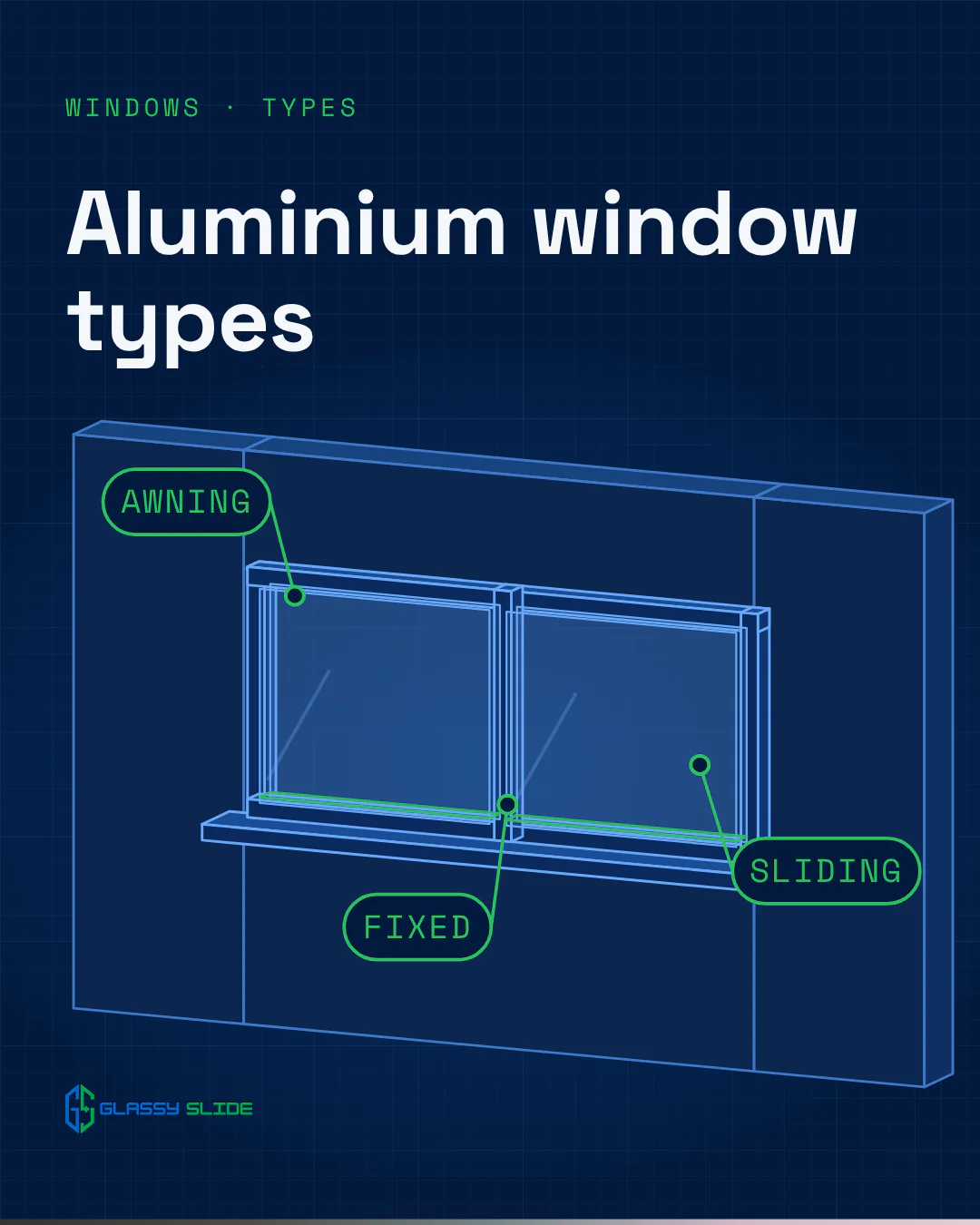
Walk around a Melbourne home and the windows are rarely all the same. A bathroom wants fresh air and privacy, a living room wants a view, and a kitchen window has a bench in front of it. The style you pick decides how much air you get, what is in the way and how it feels to use every day. This guide covers the five common aluminium window types, shows how each one opens, and gives you a short list of questions to settle before you ask for a quote.
What this adds to our other window guides
Our window replacement cost guide reads what the market publishes for a replacement window, and the double glazing cost guide covers retrofit against new units. This guide is about the style: how each type works and which suits which room.
How the five types open
Choose a type in the drawing to see how it opens. The drawing is simplified and exaggerated, and no sizes are shown.
Five aluminium window types, and what moves in each.
Awning
- Awning. Hinged along the top edge. The bottom swings outwards, so the open sash sheds light rain and the window can stay slightly open.
- Casement. Hinged down one side, like a small door. The whole sash swings out, so you need clear space outside it.
- Sliding. One sash slides sideways past a fixed one on its own track. Nothing swings, but the open part is about half the window.
- Double-hung. Two sashes that slide up and down in the same frame. The lower sash lifts past the upper one, so the open part is about half the window.
- Fixed. Glass held in the frame with nothing to open. It gives the most glass for the frame and nothing to wear, but no fresh air.
Simplified drawing, not an installation detail. The opening and the travel are exaggerated and no sizes are shown. Each window lasts about 5 seconds when played.
Awning windows
An awning window is hinged along the top and swings out at the bottom. Because the sash tilts out and down, the open window can often stay slightly open in light rain, and the opening is usually shaped like a long, shallow slot. Awning windows are common in bathrooms, laundries and high wall positions, and they pair well with a fixed window below for the view.
Things to check: the sash swings outwards, so keep the space outside clear, and think about how you will reach the handle if the window is high.
Casement windows
A casement window is hinged down one side and swings out like a small door. The whole sash can open, so a casement gives the largest clear opening of the opening types, and it can catch a breeze from the side when it is open.
Things to check: the sash swings out into the space beside the window, so it can get in the way of a path, a balcony or a plant. On an upper floor, think about whether the open sash is safe and whether a stay limits how far it opens.
Sliding windows
A sliding window has one sash that slides sideways along its own track past a fixed or second sash. Nothing swings in or out, so it suits spots where there is no room for an open sash: over a deck, beside a path or behind a bench.
Things to check: only part of the window opens, about half of it, because one sash overlaps the other. The track needs to be kept clean, and worn rollers can make a sliding window stiff; our guide to a sliding door that is hard to open covers the same mechanism for doors.
Double-hung windows
A double-hung window has two sashes in one frame that slide up and down. The lower sash lifts past the upper one, so you can open it from the bottom, and on some windows the top sash lowers as well. Double-hung is the style of many traditional and heritage homes, and we supply aluminium double-hung and sash-style windows.
Things to check: like a sliding window, about half of the opening is available at any one time. If you have an old timber sash window that sticks or will not stay up, see repair or replace sash windows and common sash window problems, and for a home in a heritage overlay see heritage overlay windows.
Fixed windows
A fixed window holds the glass in the frame with nothing to open. It gives the most glass for the frame, has no hinges or rollers to wear, and suits a view, a stairwell or a place where you want light but no draught.
Things to check: it does not ventilate, so most rooms need an opening window somewhere else. A fixed pane is often placed beside or below an awning or casement.
A quick comparison
| Type | How it opens | What it gives you | Check before you choose |
|---|---|---|---|
| Awning | Hinged at the top, swings out at the bottom | Ventilation that can often stay open in light rain | Clear space outside; reach to the handle |
| Casement | Hinged at the side, swings out | The largest opening of the opening types | The space the sash swings into |
| Sliding | One sash slides sideways | No swing space needed | About half opens; keep the track clean |
| Double-hung | Two sashes slide up and down | A traditional look; opens from the bottom | About half opens at a time |
| Fixed | Does not open | Most glass for the frame; nothing to wear | No ventilation |
This table describes how each style generally works. Particular products differ, so we confirm the details for your openings.
Choosing by room
- Bathroom or laundry. An awning window is a common choice, and you can ask about privacy glass. Check that you can reach the handle.
- Kitchen. Think about what is in front of the window. A bench can make an awning hard to reach, and a sliding or casement window can be easier.
- Living room. A large fixed window for the view with an opening window beside it is a common pairing.
- Bedroom. Ask about security and about how far the window opens, especially upstairs and where children may be around. We supply security screens and locks.
- Next to a path, deck or balcony. A sliding window avoids a sash that swings into the space.
Glass and screens do not depend on the style
Whichever style you choose, we supply it single or double glazed, made to measure. We also supply insect screens, security screens and locks, and the way a screen fits can differ by style, so say which you want when you ask for a quote. Glass in a window is selected per opening, with AS 1288 as one requirement, so we confirm the glass type when we measure. Our guide to quieter and warmer windows covers the glass choices, and our window security guide covers locks and screens. We fit aluminium only; see uPVC or aluminium for the reasons.
Replacing the style or keeping it
Changing from one style to another, for example a sliding window to an awning, changes the frame and the opening, so it is a replacement and not a retrofit. If you like your existing style and the frame is sound, new glass in the old frame may cost less: see double glazing existing aluminium windows. For a new double-glazed aluminium window, supplied and installed, our usual range is $2,300 to $3,500, and the style, size and glass move it within that range. That is a guide figure, not a quote.
Approval
Whether you need approval to change a window depends on the property. A heritage overlay, owners corporation rules or a bushfire area can all affect window work, and your council or a registered building surveyor decides what applies, so check before you order.
Ask us for a written quote
We help you pick the style for each opening and how you use the room, then price it fairly, in writing, with every window's style, size, frame and glass listed. We supply and fit aluminium windows across Melbourne. See aluminium windows or ask for a window quote.
Questions
What are the main types of aluminium windows?
The five most common are awning (hinged at the top), casement (hinged at the side), sliding (one sash slides sideways), double-hung (two sashes slide up and down) and fixed (glass that does not open). We also supply louvre and bifold windows.
Which window type gives the most fresh air?
A casement window can open its whole sash, so the opening is close to the full size of the window. Awning windows open out at an angle and can often stay open in light rain. Sliding and double-hung windows open about half of the window, because one sash overlaps the other.
What is the difference between an awning and a casement window?
An awning window is hinged along the top and swings out at the bottom. A casement window is hinged down one side and swings out like a door. Both open outwards, so both need clear space outside the window.
Which window type suits a bathroom or a kitchen?
Awning windows are a common choice for bathrooms because the sash opens outwards and the glass can be privacy glass. In a kitchen, think about reach over the bench. A sliding or casement window can be easier to reach than an awning high on a wall. Ask us to look at the room.
Are fixed windows worth having?
Yes, where you want light or a view but no ventilation. A fixed window has no sash to open, so it has no hardware to wear and the most glass for its frame. Many homes pair a fixed window with an opening one nearby.
Can any of these windows be double glazed?
Yes. We supply each style single or double glazed, made to measure. Our guide to what a new double-glazed window costs has the figures and what moves them.
Do I need approval to change the window style?
It depends on the property. A heritage overlay, owners corporation rules or a bushfire area can all affect window work, and your council or a registered building surveyor decides what applies. Check before you order.
How do I choose the right window type for each room?
Start with what you want from the window, such as air, light, a view, privacy or security. Then check the space it opens into, how you reach it and what will sit in front of it. We measure on site, suggest a style for each opening and list it in the written quote.
Was this guide helpful?

We supply and install double-glazed aluminium windows and doors, alfresco enclosures and glass partitions, and repair timber windows across Melbourne from our base in Bundoora. 5.0 ★ on Google.
Keep reading
Related guides
Double glazing4 min read
Hot west-facing windows in a Melbourne summer: shade, toned glass and Low-E
Why west-facing rooms heat up on summer afternoons, what shade, toned glass and Low-E each do, and what to ask before you change the glass.
Cost guides4 min read
Double-glazed sliding doors in Melbourne: your options and what they cost
Retrofit double glazing or a new aluminium sliding door? The options for a Melbourne home, what each costs, and what a sliding door quote should list.
Cost guides4 min read
Window replacement cost in Melbourne: what aluminium double-glazed windows cost
What published Melbourne price guides say about replacing aluminium windows, why the figures differ so much, and how to compare quotes for a new double-glazed window.