
Shop glass door dragging, slamming or won't lock: what is wrong and what can be repaired
A shop glass door that drags, slams or won't lock usually has a worn closer, pivot or patch fitting, or a lock out of line. What each does and when to repair.
By Glassy Slide teamPublished 4 min read
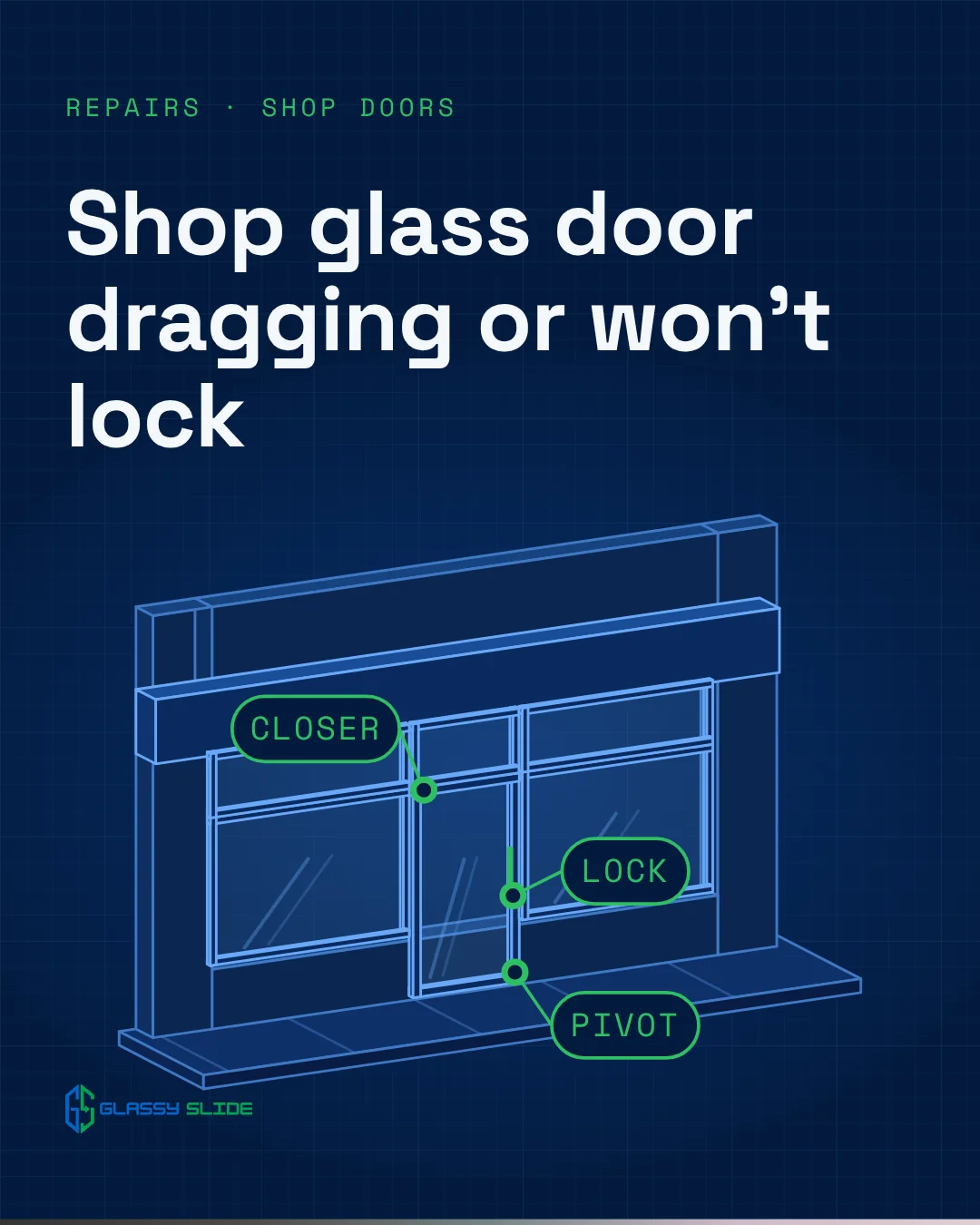
A shop door gets opened and closed hundreds of times a day. When it starts to drag on the floor, slam, stop short of the frame or refuse to lock, the glass is usually fine. The problem is in the parts that carry and control the door. Here is what those parts do, how each one goes wrong, and when a repair is enough.
The parts that carry and control a shop door
Pivots. A glass door usually turns on pivots at the top and bottom of its hinge edge. They carry the weight of the leaf. When a pivot wears or loosens, the door sinks on that side.
Patch fittings. On a frameless glass door, metal patch fittings clamp the glass at the top and bottom corners and hold it to the pivots. They keep the door square. A loose patch fitting lets the glass shift.
The closer. A closer is a spring-and-oil mechanism, often in the head of the frame or in the floor, that draws the door shut and controls how fast it closes. Over time its settings drift and the arms and seals wear.
The lock and keeper. The lock bolt or latch enters a keeper fixed to the frame or the floor. The two have to meet in the same place every time.
Closer, pivots and lock: three parts that have to line up.
Closer
- Closer. The closer is the spring-loaded arm that draws the door back to the frame. A door that is slow, slams or stops short of the frame may need the closer adjusted or replaced.
- Pivot and patch fittings. The door turns on its pivots and is held by the patch fittings at the top and bottom of the glass. If the pivot or fitting wears or loosens, the door can drop and its bottom corner can drag on the floor.
- Lock and keeper. The lock bolt has to meet the keeper on the frame. If the door has dropped, the bolt is lower than the keeper and will not enter it. Once the door is back square, the bolt lines up.
Simplified drawing, not an installation detail. The drop and the closing movement are exaggerated and no sizes or settings are shown. Each step lasts about 7 seconds when played.
What each symptom usually means
- The door drags on the floor or scrapes at the bottom corner. The door has dropped. Look for a pivot or patch fitting that has worn or loosened.
- The door won't lock, or locks only if you lift or push it. The bolt and keeper no longer line up. A dropped door is the most common reason. A worn lock or a damaged keeper is the next.
- The door slams, or swings freely. The closer needs adjustment or replacement.
- The door stops a little short of the frame, or won't latch on its own. The closer is weak or out of adjustment, or the door has dropped so that it catches.
- The door sticks at the top. The frame may have moved, or the door has tilted. Check the pivots and the frame before the closer.
These are common patterns, not a diagnosis. A fitter confirms the cause on site, because the same symptom can come from two parts at once. A door that has dropped, for example, can also leave the closer working against it.
Repair, adjust or replace
Many of these faults are repairs. Closers, pivots, patch fittings and locks on aluminium and frameless shop doors can often be repaired or replaced without touching the glass. A door that has dropped can often be lifted and squared. A lock that has gone out of line can often be brought back into line.
Replacing more than a part is worth considering when:
- the frame is bent or out of square, so a repaired door soon drops again;
- the glass leaf is chipped or cracked at the edge or at a fitting. A damaged toughened pane is replaced rather than repaired, as in the broken shop window guide;
- the same door keeps failing and repair after repair is adding up. Our guide to replacing an old shopfront sets out when the whole front is the better value.
What not to do while you wait
- Do not force a door that is stuck or locked. Pulling or kicking a glass door can break the glass or the fitting.
- Do not lean on or hang things from a dropped door. It increases the load on a damaged pivot.
- Do not leave a door that won't lock overnight without telling anyone. A door that cannot be secured is a risk to the shop. We can board up or make the opening safe 24/7. See shop theft and break-ins for the wider picture.
- Do not change a lock or latch on a door that is a way out of the building without checking. Exit doors have their own rules. The automatic door servicing guide explains how exit doors and their latching are treated as essential safety measures in Victorian buildings, so check with your building surveyor, owner or managing agent first.
What to send us so we can help fast
A few photos and a short description save a visit:
- A photo of the whole door and the frame, taken straight on.
- A close photo of the bottom corner at the hinge edge, and the floor where the door scrapes.
- A close photo of the top corner and the closer.
- A close photo of the lock and the keeper.
- A line on what the door does: drags, slams, won't close, won't lock, or sticks.
Also tell us whether the glass is framed in aluminium or frameless, whether the door is a single or a pair, and whether anyone can get in or out safely right now. Glass that is cracked or hanging needs attention first.
Talk to us about your shop door
We repair shop door closers, pivots, patch fittings and locks, replace broken shop glass and make fronts safe 24/7. See shopfronts and entry doors or safety glass replacement. If you would like a door looked at, ask for a shopfront quote and attach photos. The frameless or aluminium guide explains how the two door types differ.
Questions
Why does my shop glass door drag on the floor?
Most often the door has dropped. A worn pivot, a loose patch fitting or a door that has shifted on its hinge edge lets the free corner sink until it scrapes. A fitter checks the pivot and fittings and lifts the door back square. If the glass or frame has been knocked, that needs a look too.
Why won't my shop door lock?
The lock bolt no longer lines up with its keeper. Usually the door has dropped or the frame has moved, so the bolt meets the wrong spot. Lifting the door back square often fixes it. If the lock itself is worn or the keeper is damaged, the lock or keeper is adjusted or replaced.
Why does my glass door slam or stay open?
The door closer controls how the door closes. A closer that has lost its settings, leaks oil or has worn arms can make a door slam, stop short of the frame or not close at all. Adjustment or a replacement closer is usually the fix. A heavy door that slams is a risk to fingers and glass.
Can a cracked or chipped glass door be repaired?
A door with a cracked or chipped pane is a safety question, not only a repair one. Keep customers away from it and have it looked at. A damaged toughened pane is normally replaced rather than repaired. Never force or lean on a door with a cracked pane.
Do you repair frameless and aluminium shop doors?
Yes. We repair shop door closers, pivots, patch fittings and locks on aluminium-framed and frameless shop doors across Melbourne. Send photos with a quote request and tell us if the door is hard to close, drags or won't lock.
Can you change a lock on a shop door that is a way out of the building?
Doors on the way out of a shop can have exit rules, so the lock or latch should not be changed without checking. Your building surveyor, owner or managing agent can tell you whether the door counts as an exit. We can look at the door and explain what we find.
Was this guide helpful?

We supply and install double-glazed aluminium windows and doors, alfresco enclosures and glass partitions, and repair timber windows across Melbourne from our base in Bundoora. 5.0 ★ on Google.
Keep reading
Related guides
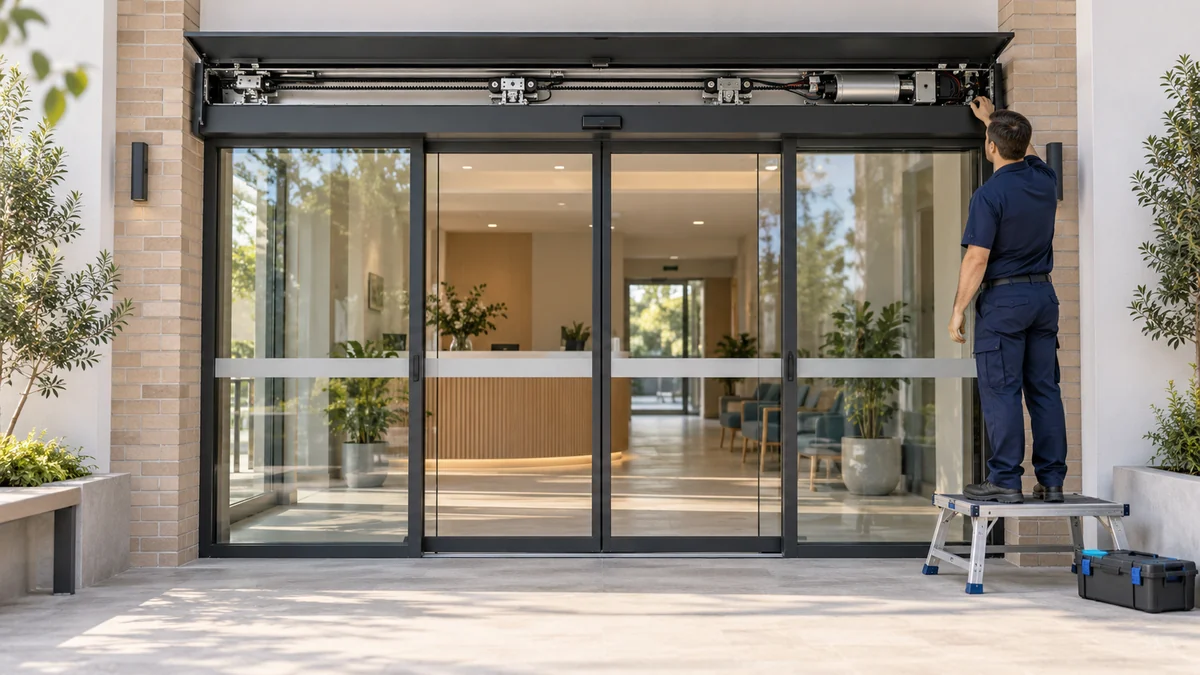
Shopfronts5 min read
Automatic door servicing in Victoria: AS 5007, safety checks and ESM
Who checks an automatic door, what a service covers, whether it counts as an essential safety measure, and what to ask a servicing company in Victoria.
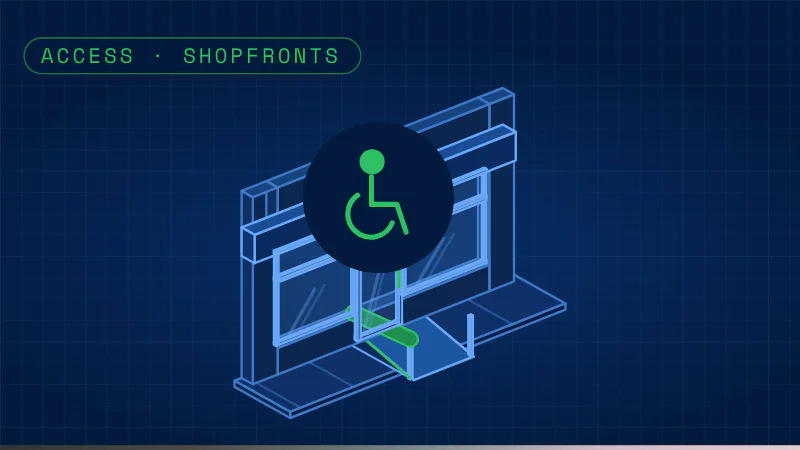
Shopfronts4 min read
Accessible shop entrances: when a new door triggers an upgrade
When must a new shop door or shopfront be accessible? How the Premises Standards, the affected part and the tenant concession work, in plain English.
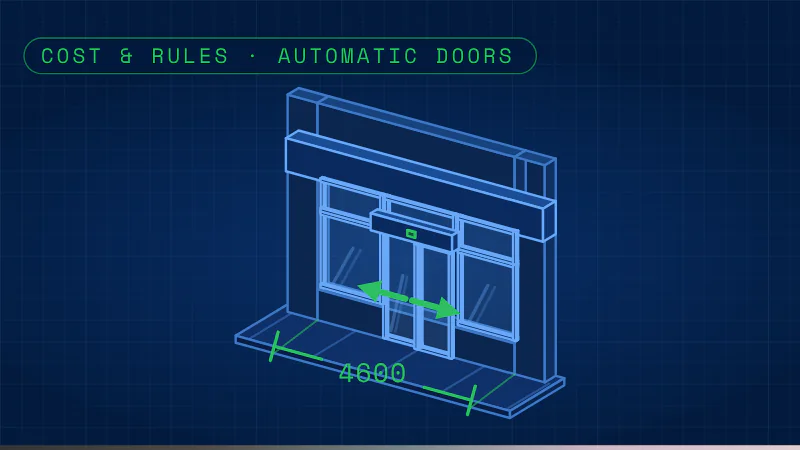
Shopfronts3 min read
Automatic sliding doors for a small shop: cost, rules and retrofitting
What an automatic sliding door for a small Melbourne shop involves: market costs, fitting into an existing front, exit and standards questions, and servicing.