
What to look for in a shopfront glass quote: how to compare two quotes
Two shopfront glass quotes, two different totals. How to line them up item by item, what a good quote names, what is often left out and the questions to ask.
By Glassy Slide teamPublished 5 min read
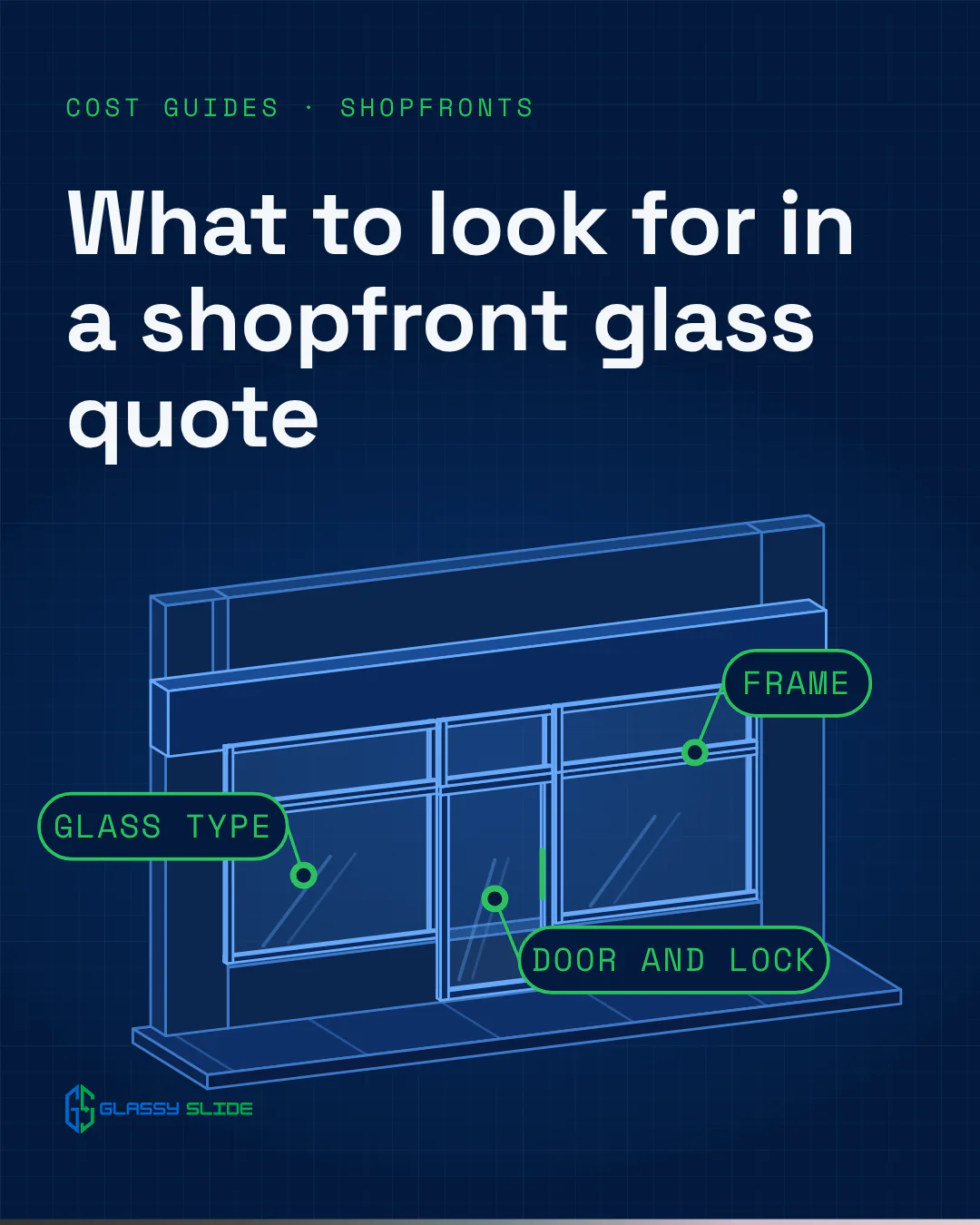
Two shopfront quotes arrive and the totals are far apart. Before you pick the cheaper one, or assume the dearer one is padded, check whether they describe the same job. A quote is a list of what will be done, with a price at the bottom. This guide shows how to line two of them up, what a good quote names, what is often left out and what to ask.
It builds on the six-point checklist in our shopfront cost guide, which also shows published market figures and what moves the price. We do not repeat those here, and we do not quote any prices on this page.
Start by lining the quotes up
Put the two quotes side by side and make a simple table with one row for each item below. Mark each cell included, excluded or not mentioned. The rows that say "not mentioned" are the ones to ask about.
| Item | Quote A | Quote B |
|---|---|---|
| Measure and check on site | ||
| Each pane: glass type, thickness, tint or frosting | ||
| Frame system and finish | ||
| Doors, hinges or pivots, closers, locks and handles | ||
| Removing and disposing of the old shopfront | ||
| Sealing, flashings and making good around the frame | ||
| Footpath protection and working hours | ||
| Permits, landlord consent and drawings | ||
| Payment terms and what the price is valid for | ||
| GST shown |
Two totals only compare once most of the cells match. If Quote A includes removal and Quote B does not, you are not comparing like with like.
What a good quote names
The glass, pane by pane. A quote that says "supply and install shopfront glass" has said almost nothing. Glass must be selected for each opening and its safety requirements. A glazier assesses the location, size, framing and human-impact risk, including AS 1288, and toughened or laminated safety glass may be required. A pane beside a door or near the floor is a different job from a high window. Look for the type and thickness of each pane or group of panes, and any tint, frosting or laminate. If you want privacy at the glass, see frosting and privacy film on shop glass. If security matters, see shopfront security for how toughened, laminated and double-glazed glass differ.
The frame. Aluminium-framed or frameless, and the finish. The two systems fit and price differently, and our guide to frameless or aluminium-framed shopfronts sets out the difference. A quote should say which one it is pricing.
The doors and hardware. Swing door, pair of doors or automatic sliding door; the closer, the pivots or hinges, the lock and the handle. Check that the lock and closer are listed, and that both quotes name comparable parts. If you rely on a door that needs repair rather than replacement, a repair may be the better buy; see a shop glass door that drags or won't lock.
The edges of the job. Removal and disposal, sealing and flashing, making good the wall or floor, and any painting. These are the lines that appear as variations afterwards if they are not written down.
Who does what. Permits, drawings, landlord consent, ordering the glass, and who is on site. The shopfront permit guide explains which approvals can apply. The registered building surveyor and your council decide what your job needs, so a quote should not simply say "permits not included" without saying what the quoter expects to be needed.
What is often left out
These are the items to ask about directly if a quote does not mention them:
- Removal and disposal of the old frame and glass.
- Making good where the old frame leaves marks, gaps or damaged render.
- After-hours work, if you need to keep trading or the landlord limits access.
- Footpath protection or a safe working area for the public.
- Temporary security between the old front coming out and the new one being locked. We cover this in the first hour after a smash for broken glass, and the same thinking applies to a planned job.
- Glass markings on a glass door. They are a separate matter from the glass itself; see glass door markings on shop doors.
- Variations: how a change will be priced, and whether it is agreed in writing first.
Questions worth asking
- Can you list the glass for each pane, with type and thickness?
- What is included in the price for removal, disposal and making good?
- Which door hardware is included, and is it the same on both quotes?
- What happens if you open the old frame and find damage you could not see?
- Who applies for any permit or landlord approval, and is it in the price?
- How long is the price valid, and when is payment due?
- What written terms or guarantees come with the work? Ask for these in writing, and compare them on both quotes. A promise on the phone is not a term.
- Will you measure on site before the price is final?
A quote worked out from photos alone is a guide. Glass is made to size, so the real price is firm only once the opening is measured.
When a gap in price is real
Once the two quotes match, a remaining gap can still be genuine. Different glass, different hardware, a different frame system or a different way of keeping the shop open can all be reasons. Ask each quoter to explain the gap in writing. A good one will name the cause. If the answer is vague, treat that as information.
If one quote is far below the others, check what has been left out before you assume it is a bargain. The table above is the fastest way to find out.
Getting a quote from us
We supply and fit aluminium-framed and frameless shopfronts, shop doors and shop glass across Melbourne. We measure first, and the price is in writing with the glass named for every pane. To start, see shopfronts and entry doors, safety glass replacement, or ask for a shopfront quote and send photos of the frontage and the door.
Questions
Why are two quotes for the same shopfront so different?
They are often not quoting the same job. One may include removing and disposing of the old shopfront, hardware, sealing and making good, and the other may not. One may name safety glass for each pane and the other may say only "glass". Line the two up item by item before you compare the totals.
What should a shopfront glass quote say about the glass?
The glass type and thickness for every pane or group of panes, whether it is toughened, laminated or double glazed, and any tint or frosting. Glass is selected for each opening, with AS 1288 as one of the requirements, so a quote that says only "glass" has not said what you will get.
Should the quote include removal of the old shopfront?
It should say so either way. Removal, disposal, repairs to the wall or floor around the frame and any painting or finishing are easy to leave out of a quote and expensive to find out about later. Ask for each to be listed as included or excluded.
Is the lowest quote the one to take?
Not by itself. A lower total can mean a thinner scope, a different glass or hardware that is not the same standard. Compare what is included first, then the total, and ask the quoter to explain any gap you cannot account for.
Who deals with permits and landlord approval?
The quote should say who does what. Many shopfront jobs need the landlord's consent, and some need a building or planning permit, which the registered building surveyor and your council decide. See the shopfront permit guide, and ask the quoter what they will and will not handle.
How do I ask for a written shopfront quote from you?
Send photos of the frontage and the door on WhatsApp or use the quote form. We measure on site and give the price in writing, with the glass named for every pane.
Was this guide helpful?

We supply and install double-glazed aluminium windows and doors, alfresco enclosures and glass partitions, and repair timber windows across Melbourne from our base in Bundoora. 5.0 ★ on Google.
Keep reading
Related guides
Alfresco5 min read
Outdoor glass walls and patio enclosures in Melbourne: fixed panels or sliding doors?
Planning outdoor glass walls for a patio or alfresco in Melbourne? How to choose fixed panels or sliding doors for each wall, what a bay costs and what to check.
Cost guides4 min read
Double-glazed sliding doors in Melbourne: your options and what they cost
Retrofit double glazing or a new aluminium sliding door? The options for a Melbourne home, what each costs, and what a sliding door quote should list.
Cost guides4 min read
Window replacement cost in Melbourne: what aluminium double-glazed windows cost
What published Melbourne price guides say about replacing aluminium windows, why the figures differ so much, and how to compare quotes for a new double-glazed window.