
Do shopfront windows need double glazing? Heat, noise and the NCC
Does a shop window have to be double glazed? What NCC 2025 says about shopfront glass, when double glazing helps with heat and noise, and what to ask for.
By Glassy Slide teamPublished 5 min read
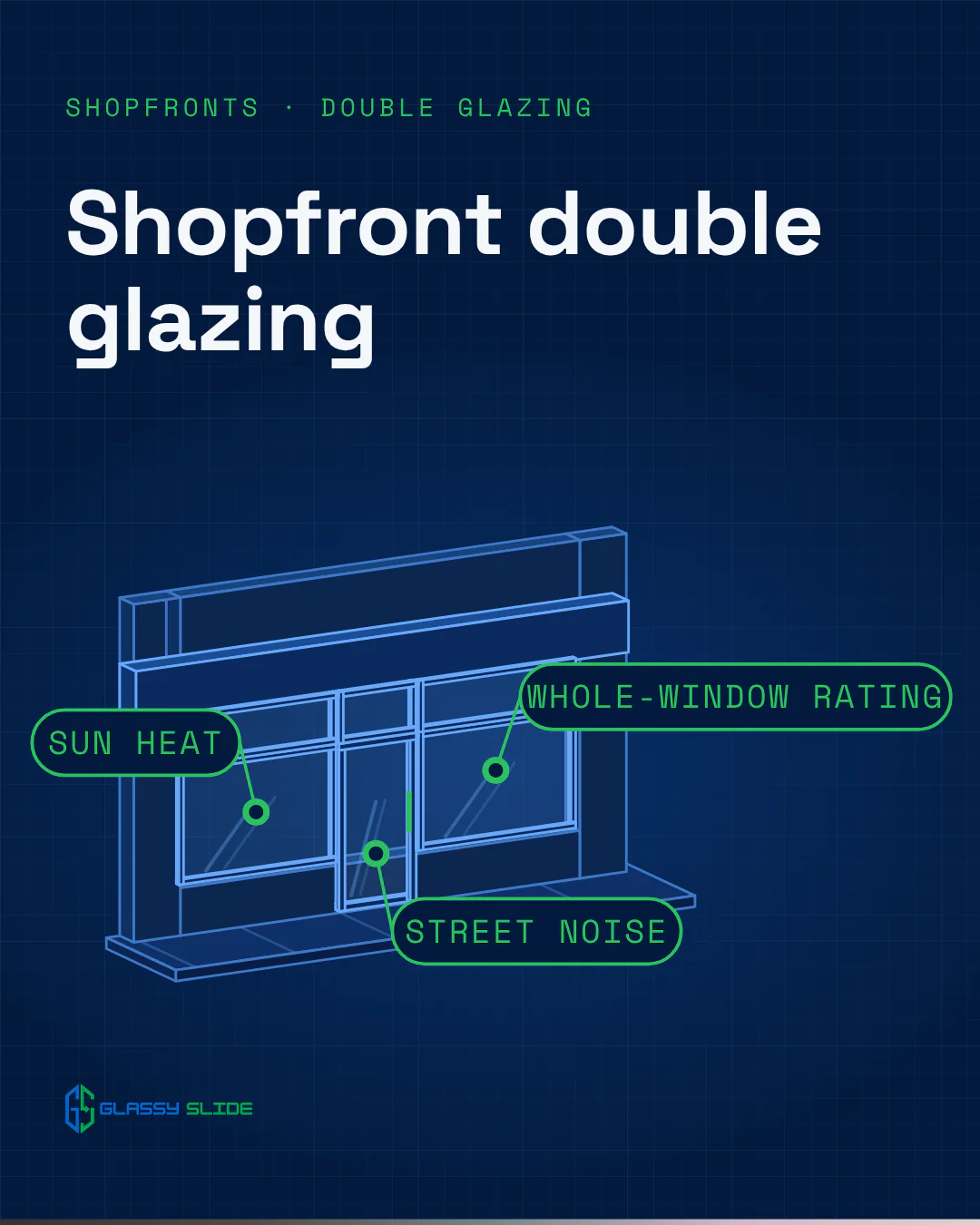
Most shop owners ask this when a new front is being priced: do we have to double glaze it? The short answer is that the building code does not ask for double glazing by name. It sets a limit on how much heat the whole window lets through, and double glazing is one way, often the most practical way, to meet it. Here is what the code says, when double glazing is worth having anyway, and what to ask for.
What this adds to our other guides
Our shopfront cost guide shows what moves the price, and frameless or aluminium-framed shopfronts compares the two systems. This guide is about the glass build-up: single glazing, double glazing and what the energy rules look at.
What NCC 2025 says about shop glass
The energy provisions for shops, which the code classes as Class 6 buildings (ABCB, Part A6), are in Part J4 of NCC 2025 Volume One, "Building fabric" (ABCB, Part J4). Three points matter for a shopfront.
- Shop glass has its own name. The code defines display glazing as glazing used to display retail goods in a shop or showroom directly adjacent to a walkway or footpath, but not including glazing used in a cafe or restaurant (NCC 2025 glossary).
- A whole-window number, not a glass type. Under the deemed-to-satisfy rules, the Total System U-Value of glazing, including display glazing, must not be greater than U5.8. The same clause also limits solar heat gain for display glazing. The code defines Total System U-Value as the thermal transmittance of the composite element, allowing for airspaces and thermal bridging, so the frame counts as well as the glass (Part J4, clause J4D6, and the glossary above).
- There is more than one route. A deemed-to-satisfy solution is one way to comply; a performance solution is another (J4D1). The surveyor decides which route your job uses.
In plain words: U-value is how easily heat passes through the window, and a lower number means less heat gets through. Solar heat gain is how much of the sun's heat comes in. Neither number is the same as "single" or "double". Product makers publish the tested rating of the whole window, which is what a surveyor wants to see.
Other limits in Part J4 apply to wall-glazing construction as a whole and vary by climate zone. The code uses eight climate zones, shown on the ABCB climate map. We do not list those figures here, because they depend on the building and how the surveyor assesses it.
When does it apply to your job?
NCC 2025 started in Victoria on 1 May 2026, and the ABCB's table shows no transition period (ABCB adoption information). Victoria's list of changes to the code, Schedule 10, does not include a variation to Part J (NCC 2025 Schedule 10 Victoria).
Whether the energy provisions are applied to your work depends on the work itself. A new shopfront, a new opening or a structural change normally needs a building permit, and the registered building surveyor decides what applies. A like-for-like repair is often exempt from a permit, and heritage areas and leases can limit what you may change. Our shopfront permit guide covers those questions. We cannot decide it for your shop, and we are not the building surveyor.
When double glazing helps a shop
Whatever the code requires, there are practical reasons to choose it.
- Heat and glare at the counter. A west-facing front can heat the shop in the afternoon. A glass build-up with a low solar heat gain rating, and a front that is shaded, can help. See quieter, warmer windows for how the glass and the frame work together.
- Street noise. Double glazing can help in a busy street, but gaps around doors and frames matter as much as the glass. A sealed, well-fitted front gets more from it.
- A more comfortable shop. Less heat loss in winter and less heat gain in summer can reduce the load on heating and cooling. We do not promise a saving, because it depends on the building and how it is used.
- Condensation. A better rated build-up helps keep the inner surface warmer. If a sealed unit later fogs inside, see our guide on foggy double glazing.
What to think about before you choose it
- The frame matters as much as the glass. A double-glazed unit in an old frame can lose much of the benefit. Thermally improved aluminium frames are one way to address this; see uPVC or aluminium windows for how a thermal break works.
- Weight and fixings. Double-glazed units are heavier than single panes. The frame and the fixings must be able to carry them, which matters on large shopfront panes and on frameless systems.
- Doors and low-level glass still need the right safety glass. Glass in and beside doors is selected for each opening, with AS 1288 as one requirement. A double-glazed unit does not change that. See glass door markings and safety glass.
- Film on the glass. Some films and dark tints can heat double-glazed units unevenly, so check with the film maker and your glazier first. See frosting, logos and privacy film.
- Cafes and restaurants. The code's display glazing definition leaves out glazing in a cafe or restaurant, so ask your surveyor how your glass is treated. See cafe and restaurant shopfronts and ask your surveyor.
- Cost. Double glazing usually costs more than single glass. The size, frame, doors and access decide the rest, and every shopfront is measured and priced in writing.
What to ask for in a quote
- The glass build-up for each pane, and whether the opening needs safety glass.
- The tested rating of the whole window, including the frame, for U-value and solar heat gain, from the product maker.
- The frame type, and whether it is thermally improved.
- Who deals with the building surveyor, and whether a permit is needed.
- How the new front is sealed to the building, and who covers the sealed-unit warranty. We cannot state a warranty here, so ask for it in writing.
Our guide on comparing shopfront glass quotes has a longer checklist.
Talk to us about a double-glazed shopfront
We supply and fit double-glazed shopfronts and entry doors across Melbourne, in aluminium-framed and frameless systems where they suit. We measure on site and quote in writing, with the glass, the frame and the doors listed. Call or WhatsApp 0410 107 794, or see shopfronts and entry doors, double glazing for sliding doors and windows or ask for a shopfront quote.
Questions
Does a shop window have to be double glazed in Victoria?
Not by name. The National Construction Code sets a heat-loss limit for the whole glazing system, glass and frame together, rather than asking for double glazing as such. Some shopfront products will meet it with double glazing and a thermally improved frame, and the surveyor looks at the actual product and the work. Ask for the product's tested rating.
What does NCC 2025 say about shopfront glass?
For the energy provisions, shop glass used to display goods next to a footpath is called display glazing. Under the deemed-to-satisfy rules in Part J4, the Total System U-Value of glazing, including display glazing, must not be greater than U5.8, and display glazing also has a limit on solar heat gain. Another route, a performance solution, is also allowed. Ask your building surveyor which applies to your job.
When did NCC 2025 start in Victoria?
The ABCB lists Victoria as adopting NCC 2025 on 1 May 2026, with no transition period shown. Some provisions can still be varied or apply differently by state, so check the variations that apply to your job.
Does replacing the glass in a shopfront need a building permit?
Like-for-like repairs are often exempt, but new openings, structural changes and work in a heritage area usually need a permit. Whether the energy provisions are assessed depends on the work, so the registered building surveyor decides. Our permit guide explains the building and planning sides.
Will double glazing make a shop quieter?
It can help with street noise, but the result depends on the glass build-up, the frame, the seals and how air-tight the whole front is. Gaps around a door or frame let noise in whatever the glass. Ask what is being proposed for the specific front, and do not expect a guaranteed result.
Do double-glazed shop doors still need safety glass?
Yes where safety glass is needed. Glass in and beside doors and low-level glass is selected for each opening, with AS 1288 as one requirement, and a double-glazed unit does not change that. A glazier assesses each opening before specifying the glass.
Can you fit double-glazed shopfronts?
Yes. We supply and fit double-glazed shopfronts and entry doors across Melbourne, in aluminium-framed and frameless systems where they suit. We measure on site and quote in writing, with the glass, frame and doors listed.
Was this guide helpful?

We supply and install double-glazed aluminium windows and doors, alfresco enclosures and glass partitions, and repair timber windows across Melbourne from our base in Bundoora. 5.0 ★ on Google.
Keep reading
Related guides
Shopfronts7 min read
Plate glass insurance for shops: is it worth it?
What shop glass cover usually includes, the questions to ask before you buy it, and how to decide if it is worth it for your shopfront in Victoria.

Shopfronts5 min read
Clinic, pharmacy and salon shopfronts: privacy with easy access
Shopfront glass for a clinic, pharmacy or salon in Melbourne: privacy where you need it, clear glass where you don't, and an entry everyone can use.

Shopfronts6 min read
Cafe and restaurant shopfronts: serving windows, doors and keeping the view
Glass for a cafe or restaurant front in Melbourne: serving windows, hinged, sliding and folding doors, and how to keep the view while you trade.