
Plate glass insurance for shops: is it worth it?
What shop glass cover usually includes, the questions to ask before you buy it, and how to decide if it is worth it for your shopfront in Victoria.
By Glassy Slide teamPublished 7 min read
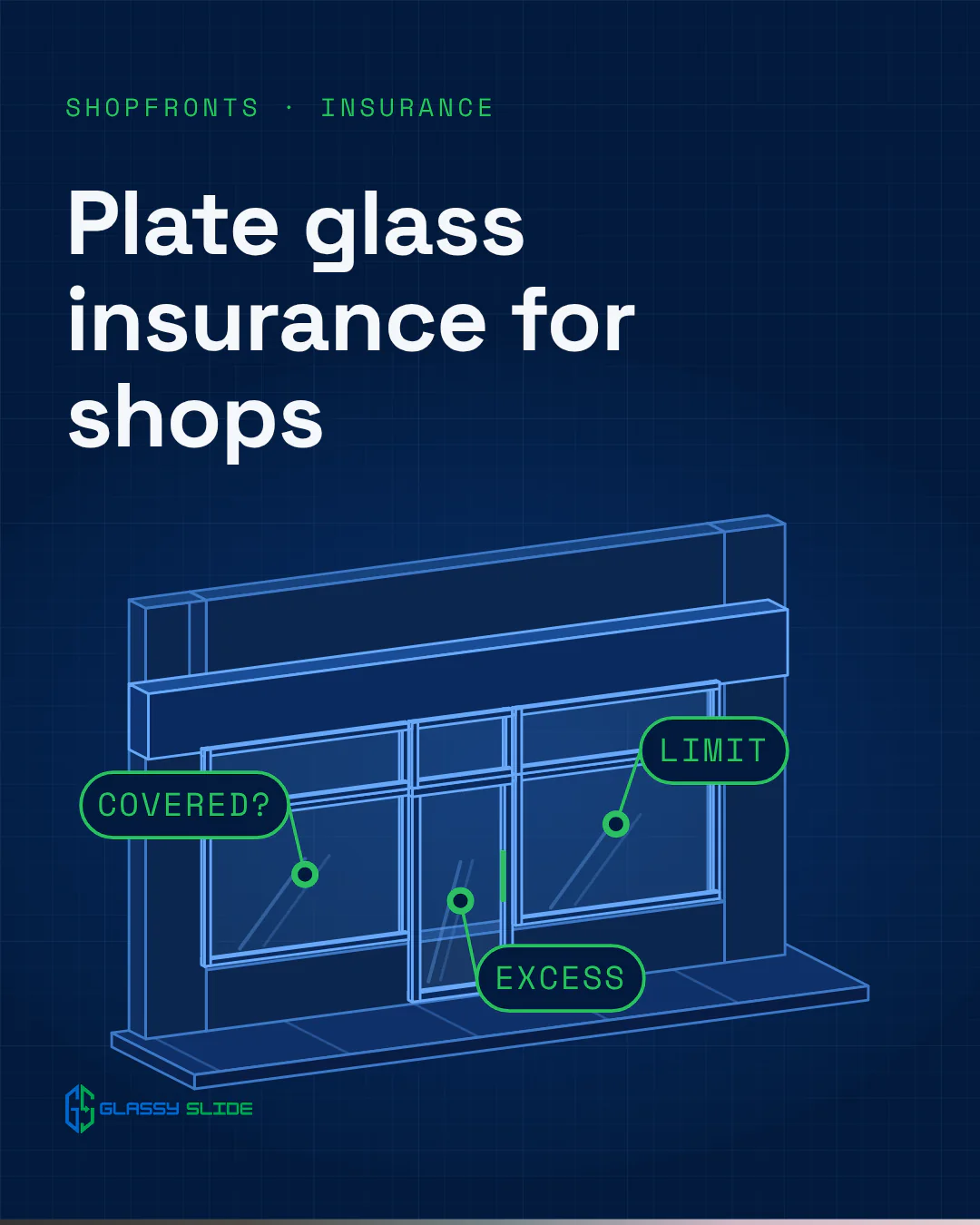
A shop front is a lot of glass, and a pane can crack or break without warning. Whether to insure it, and how, is a question most shop owners meet only after something breaks.
This guide does not tell you what to buy. It is general information to help you decide what to ask, what to check and what to compare, so that you know where you stand before a pane cracks at 2 am.
This is general information about glass, not insurance, financial or legal advice. We do not endorse or recommend any insurer or product, and we do not sell insurance. What your policy covers is set out in your policy schedule and product disclosure statement, and you can ask your insurer or broker to confirm it in writing.
What this adds to our other guides
- Broken shop window in Victoria: who pays covers the lease, the Retail Leases Act 2003 and the order of things when glass has already broken. It mentions insurance but does not help you decide whether to have glass cover.
- The first hour after a smash and what to send us when shop glass breaks at night cover the moment of damage.
- Shopfront cost and what to look for in a shopfront glass quote cover what replacement glass costs and how to read a quote.
- This guide covers the step before any of that: whether you are covered, for what, and how to compare the cover with the cost of the glass.
Start with the glass you have
Cover only makes sense next to the thing it protects. Write down what your front is made of:
- The number of panes, and their size. Large panes cost more to replace and are harder to handle.
- The type of glass. Toughened, laminated, double glazed and frameless glass each cost differently. Our security guide explains the difference between laminated and toughened glass.
- The doors. A glass door with patch fittings or an automatic operator is more than a pane.
- Frosting, film or signage on the glass. Ask whether these are described in the policy.
- Who owns the glass. The building, or a fit-out the tenant installed. The lease and the Retail Leases Act 2003 decide a lot here.
If you ask a glazier for a replacement quote for the largest pane and the door, you have a realistic number to set the excess and limit against.
What shop glass cover usually involves
Names vary. You may see plate glass insurance, glass cover, window breakage or an extension to a business package. In general terms:
- Cover for accidental breakage. Glass broken by an accident, or by someone breaking in, may be included. What counts, and what does not, is defined in the policy.
- Cover for the frame and fittings. Some policies cover only the glass. Others include the frame, door hardware or signage on the glass. Check which.
- Make-safe and board-up. Some policies pay for temporary protection, with or without a limit.
- A limit. The most the insurer will pay for glass, which can be per pane, per claim or per year.
- An excess. The amount you pay on each claim. If the excess is close to the cost of the glass, the cover may rarely pay out.
None of these are standard across insurers. That is why the policy schedule and the product disclosure statement matter more than any summary, including this one.
Questions to ask before you buy or renew
| Question | Why it matters |
|---|---|
| Is glass included, or an optional extra? | Some business packages leave it out unless you add it. |
| What is the excess on a glass claim? | It sets the smallest claim that is worth making. |
| Is there a limit per pane, per claim or per year? | A limit below the cost of your largest pane leaves you to pay the difference. |
| Does it cover the frame, door hardware and automatic operator? | A door can cost more than the pane next to it. |
| Are film, frosting or signage on the glass covered? | They are often described separately. |
| Does it pay for make-safe and board-up? | It is the first cost after damage, and often urgent. |
| How does it treat a required change to safety glass? | New glass may have to suit current requirements and may not match the old. |
| Can I choose my own glazier? | It affects who quotes, and how quickly the work can start. |
| What is excluded? | Damage that builds up over time or comes from poor maintenance is often excluded. |
| If I lease, does the lease ask me to insure the glass? | You may need cover to meet the lease, and the landlord may have its own. |
Ask for the answers in writing, or find them in the policy wording and note the page.
Landlord cover and your cover
If you lease, there may be two policies that touch the same glass: the landlord's building insurance and your own. They do not always match, and neither is a substitute for reading your lease.
- Ask the landlord or agent what the building policy covers and what it does not.
- Check whether your lease asks you to insure the glass, and to what value.
- If glass is damaged, tell both your insurer and your landlord or agent. Our guide to changing a shopfront between tenants lists the questions to ask about glass and approvals when a lease starts or ends.
- If the lease and the policy seem to disagree, the Victorian Small Business Commission can explain the Retail Leases Act side, and your broker can explain the policy side.
If you own the building, the glass may be your responsibility under your own policy, so read it yourself.
Is it worth it? A way to think about it
There is no right answer for every shop, so work it through with your own numbers.
- Get a replacement figure. Ask a glazier for the cost of the largest pane and the door. Add make-safe work.
- Set it against the excess and limit. If the excess is a large share of the replacement cost, or the limit is below it, the cover has less to give.
- Check whether you already have it. You may already have glass cover in a business package, or you may think you do and not. Read the schedule before adding anything.
- Consider your risk. A front on a busy road, near a loading area or with a history of break-ins is a higher risk than a recessed front in a quiet arcade. Our shop theft and break-in guide covers what changes that risk.
- Consider how much a closed shop costs you. A pane that takes days to replace, or an entry you cannot lock, costs trade as well as glass.
Cover and prevention work together. Laminated glass, security film, shutters and grilles can lower the chance of a claim, and your insurer may have its own view on them, so ask before you spend. See shop security and glass.
If you do need to claim
- Make the area safe and keep clear of the glass. Do not pick at it or tape it. If anyone is in danger or a crime is happening, call 000.
- Take photos from a safe place before anything moves: the damage, the frame, the street and anything missing.
- Tell your insurer, and your landlord or agent, as soon as practicable, in writing where you can.
- Do not delay urgent make-safe work only while you wait for approval. Keep every invoice. Ask the insurer first if you can, since some policies set conditions.
- Get a written quote for the permanent glass, naming the glass type and each opening, and ask your insurer how it treats any change to safety glass.
- Keep the paperwork, including quotes, invoices, photos, any police report number and the dates you told people.
For the photos and details that help a glazier, see what to send us when shop glass breaks at night. If a pane is cracked but still in place, see shop glass cracked but not broken.
Glass that suits the opening
Whatever your policy says, replacement glass in and beside doors is selected per opening, with AS 1288 as one of the requirements, and your insurer's cover does not change that. So an old pane may not be replaced like for like. See glass door markings and safety glass for how large panes beside an entry are treated.
Talk to us
We do not sell insurance and we cannot tell you what your policy covers. What we can do is give you a written quote for the glass and doors in your front, so you have a real replacement figure to compare with your cover. We supply and fit aluminium-framed and frameless shopfronts across Melbourne, replace shop glass with glass selected for the opening, and make shopfronts safe and board them up 24/7. Call or WhatsApp 0410 107 794, or see shopfronts and entry doors, safety glass replacement or ask for a shopfront quote.
Questions
Is plate glass insurance worth it for a shop?
It depends on how much glass the front has, who is responsible for it, the excess, and whether your business policy already covers it. A large frameless front is expensive to replace, so cover often matters more there. Compare the excess and limit with a realistic replacement quote, and ask whether glass is in your policy or optional.
Is shop window glass automatically covered by business insurance?
Not necessarily. Some business packages include glass, some offer it as an optional extra, and some leave it out. Check the policy schedule and the product disclosure statement, and ask your broker or insurer in writing if the wording is unclear.
Who needs to insure the shopfront glass, the landlord or the tenant?
It depends on the lease, what the glass is part of, and whether the Retail Leases Act 2003 applies. Some leases ask the tenant to insure glass, others do not. Read the lease and ask the agent, then check which insurance covers you. Our who-pays guide explains the lease side.
What does shop glass cover usually leave out?
Policies often exclude damage that builds up over time, damage from poor maintenance or faulty fitting, and glass that is not described in the policy. Some also leave out particular items such as signage, film or decorative glass. Exclusions vary, so check the wording for your policy.
Will insurance pay for the temporary board-up or make-safe work?
Some policies include the cost of making a premises safe or securing it after damage, and some do not, or set a limit. Ask your insurer before you need it. We make shopfronts safe and board them up 24/7, and give you a written invoice to send with your claim.
Will insurance pay to replace old glass with safety glass?
Do not assume it will. Replacement glass has to suit the opening, and safety glass may be required, so the new glass may not match the old. Ask your insurer how the policy treats any required change in specification before the work is ordered.
Can I choose my own glazier when I claim?
Policies differ. Some insurers have their own repairers, and some let you choose. Ask before you book, and keep a written quote and invoice either way.
What should I do to make a glass claim go smoothly?
Photograph the damage from a safe place, make the area safe, tell your insurer, landlord or agent promptly, and keep quotes, invoices and any police report number. Our guide to what to send us when shop glass breaks at night lists the photos that help.
Was this guide helpful?

We supply and install double-glazed aluminium windows and doors, alfresco enclosures and glass partitions, and repair timber windows across Melbourne from our base in Bundoora. 5.0 ★ on Google.
Keep reading
Related guides
Shopfronts5 min read
Do shopfront windows need double glazing? Heat, noise and the NCC
Does a shop window have to be double glazed? What NCC 2025 says about shopfront glass, when double glazing helps with heat and noise, and what to ask for.
Shopfronts5 min read
Clinic, pharmacy and salon shopfronts: privacy with easy access
Shopfront glass for a clinic, pharmacy or salon in Melbourne: privacy where you need it, clear glass where you don't, and an entry everyone can use.
Shopfronts6 min read
Cafe and restaurant shopfronts: serving windows, doors and keeping the view
Glass for a cafe or restaurant front in Melbourne: serving windows, hinged, sliding and folding doors, and how to keep the view while you trade.