Clinic, pharmacy and salon shopfronts: privacy with easy access
Shopfront glass for a clinic, pharmacy or salon in Melbourne: privacy where you need it, clear glass where you don't, and an entry everyone can use.
By Glassy Slide teamPublished 5 min read
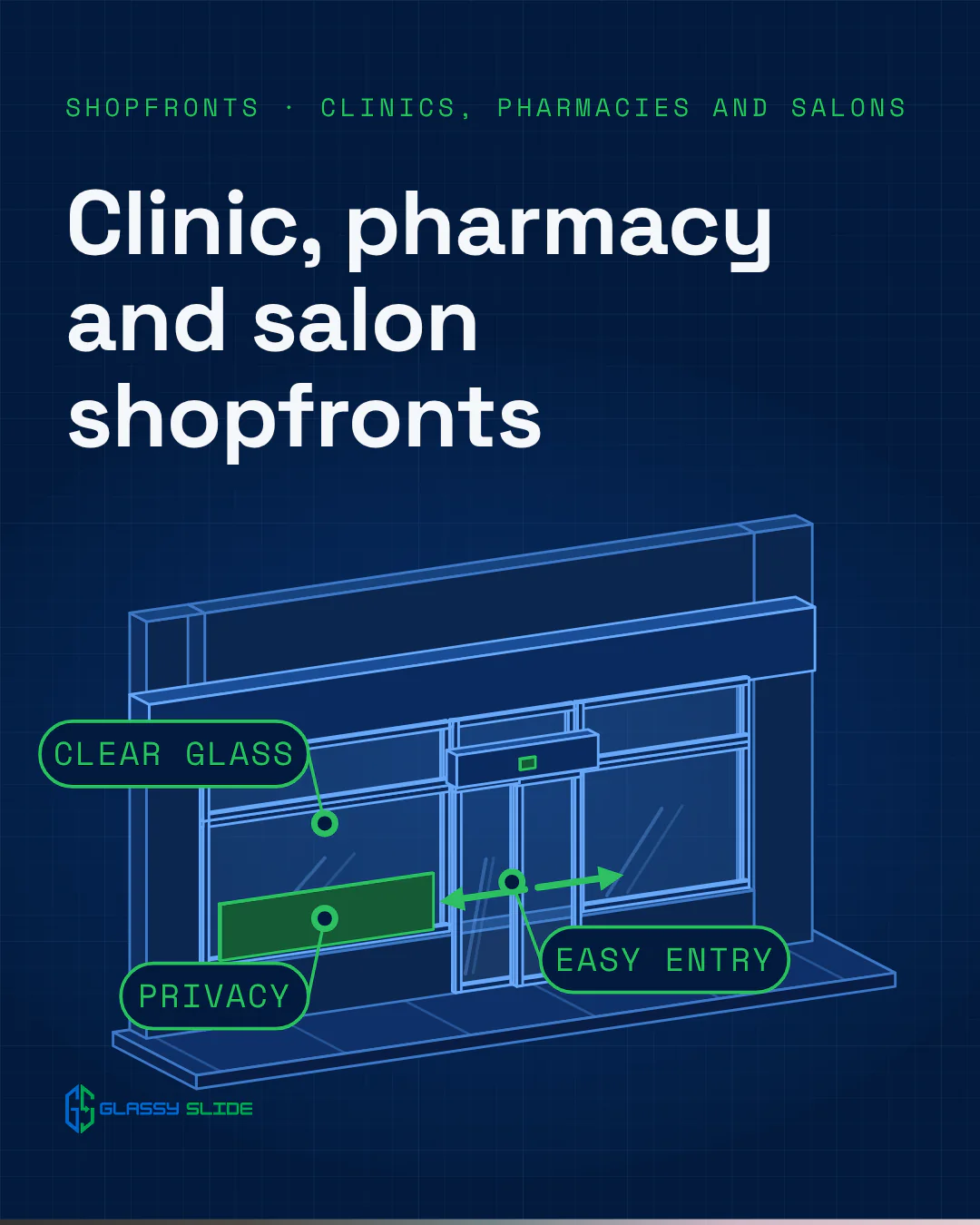
Clinics, pharmacies and salons ask more of a shopfront than most shops. People inside want some privacy, and the business still wants to look open, inviting and easy to walk into, including for someone who is unwell, unsteady or carrying a pram.
Those two aims do not have to fight each other. This guide sets out how to put privacy exactly where it is needed, keep the rest of the glass clear, and choose an entry that works for everyone, so you can decide what you want before you ask for a quote.
This is general information about glass and doors. We say nothing here about the rules for running a clinic, pharmacy or salon, which you should check with your own regulator or professional body, and we measure the front and confirm what suits before we quote.
What this adds to our other guides
- Shop window frosting and privacy film explains frosted glass, film and signs in general.
- Accessible shop entrances in Victoria explains when a new door triggers an upgrade.
- Automatic sliding doors for a small shop and automatic door servicing cover automatic entries.
- This guide covers what is particular to places where people are seen being treated, advised or styled: where privacy goes, how to keep the front welcoming and what the entry needs to handle.
Work out who can see what
Before you choose a finish, stand outside the shop and look in, then stand at your chairs, desk or counter and look out. Note where someone on the footpath can see a patient, a client, a screen, a prescription shelf or a treatment area, and where they only see the waiting area or a display.
That walk gives you a short list of places that need privacy and a longer list that do not. It is cheaper and looks better to treat the short list than to cover the whole front.
Where privacy goes
| Shop | Often private | Usually kept clear |
|---|---|---|
| Clinic | Glass in front of consulting and treatment rooms, and a band at seat height in the waiting room | The glass beside the door and the upper glass, which show light and the way in |
| Pharmacy | The glass in front of the dispensary or a consultation area | The front near the door, so staff can see out and passers-by can see in |
| Salon or beauty clinic | A lower band at chair height, or the glass in front of treatment beds | The upper glass and a display window that shows your work |
These are common patterns, not rules. Your layout decides.
The ways to get privacy
- Frosted or obscure glass. The finish is part of the pane. We supply it, and it suits a front where glass is being replaced anyway.
- Frosting or privacy film. A layer on clear glass already in place. It is quicker, but check that it suits the glass and what it does to any glass warranty. See shop window frosting and privacy film.
- Blinds or curtains inside. They can be opened and closed through the day, but they are another thing to keep clean and to remember.
- Layout. Turning a chair or moving a desk can be cheaper than treating glass, if the room allows it.
A band of frosting across the lower glass, with clear glass above it, is a common way to get privacy and still look open. Heavy coverage, posters or stock stacked against the glass makes the shop harder to see into, which also makes it harder for passers-by to notice something wrong. Our guide to shop theft and break-ins makes the same point.
If a logo or graphic can be seen from the street, it can count as a sign, and the planning rules depend on your zone. The frosting guide explains where to check.
An entry everyone can use
For these shops the door matters as much as the glass. Customers include people with walking frames, wheelchairs and prams, people who are unwell, and people carrying shopping or medicines.
- Automatic sliding door. It opens as someone arrives, with no handle to grip, which suits a busy entry. It needs regular servicing, and the doorway, sensors and markings all have to suit each other. See automatic sliding doors for a small shop and automatic door servicing.
- Hinged door. The simplest and the easiest to repair, but it needs a good closer that is neither slammed nor too stiff to push, and enough room on both sides. See shop glass door repair.
- The doorway itself. Width, a level or ramped approach and handles that are easy to use all matter. Whether a new door triggers an accessibility upgrade depends on the building work, and the registered building surveyor decides. See accessible shop entrances in Victoria.
If you are changing a front that you lease, ask your landlord or agent before you start. See changing a shopfront between tenants for the questions to ask.
Glass, markings and safety
- Safety glass. Glass in and beside doors is usually safety glass, selected per opening, with AS 1288 as one of the requirements. Frosting or privacy film is not a substitute for it.
- Markings. Large clear panes beside an entrance can be mistaken for an opening, and a frosted pattern or a logo is not automatically a marking. See glass door markings and safety glass.
- Security. Pharmacies in particular keep stock that people want. Laminated glass, security film, shutters and grilles each do a different job. See shop security and glass.
- Breakage. If the glass breaks after hours, keep clear and call us. We make shopfronts safe and board them up 24/7. See the first hour after a smash and what to send us when shop glass breaks at night.
What to tell us when you ask for a quote
- What kind of shop it is, and what people can see from the street now.
- Where you need privacy. Mark it on a photo, or describe it from your chairs, desk or counter.
- Photos. The whole front from across the street, each door and any glass you want treated.
- Door type. Hinged, sliding or automatic, and how people arrive at peak times.
- Glass or film. If you are not sure, say so, and we can talk through the options.
- Lease and approvals. Whether your landlord or agent has consented, and any permit notes you have.
We measure first, and put the price in writing with the glass, the frame and the doors named for each opening. See what to look for in a shopfront glass quote if you are comparing quotes, and how long a shopfront replacement takes for planning around your trading.
Talk to us
We supply and fit aluminium-framed and frameless shopfronts across Melbourne, supply frosted or obscure glass, and repair and make safe shop doors and glass. Send photos of your front on WhatsApp, or use the quote form. See shopfronts and entry doors or ask for a shopfront quote.
Questions
Do you supply shopfronts for clinics, pharmacies and salons?
Yes. We supply and fit aluminium-framed and frameless shopfronts across Melbourne, including the doors, and we supply frosted or obscure glass. We measure on site and put the price in writing.
How can a clinic or salon have privacy and still look open?
Frost only the part of the glass people could see into, usually a band from the floor up to about eye level, or the glass in front of a treatment chair or consulting room. Keep the glass above it and beside the door clear, so the front still shows light, activity and the way in.
Is frosted glass or frosting film better?
Frosted or obscure glass has the finish built into the pane, so it suits a front where glass is being replaced anyway. Film goes on clear glass that is already in, which is quicker, but it needs to suit the glass. Our frosting guide explains both.
Does a clinic or pharmacy need an accessible entrance?
Often it matters a great deal, because people arrive with walking aids, prams, wheelchairs or a bag of medicines. Whether a new door triggers an upgrade depends on the building work and is decided by the registered building surveyor. Our guide to accessible shop entrances explains how it works.
Which door suits a clinic or pharmacy, hinged or automatic?
An automatic sliding door suits an entry where many people arrive carrying or pushing something, and it opens without anyone touching it. A hinged door is simpler and easier to repair. Either needs the right glass, markings and upkeep. See our guides to automatic doors for a small shop and automatic door servicing.
Can a pharmacy keep displays in the window and still be secure?
Often, yes, if the displays do not block the view in and out. A front that can be seen into is harder to break into unnoticed, so many shops keep the glass near the door clear and put displays on the sides. Our shopfront security guide covers laminated glass, security film, shutters and grilles.
Does frosting or privacy film make the glass safe?
No. Frosting and privacy film are for looks and privacy. Safety glass in and beside doors is selected per opening, with AS 1288 as one of the requirements, and a film on ordinary glass is not a substitute.
What if the front breaks after hours?
We make shopfronts safe and board them up 24/7. Call or WhatsApp 0410 107 794, and send photos if you can. Our guide to what to send us when shop glass breaks at night explains what helps.
Was this guide helpful?

We supply and install double-glazed aluminium windows and doors, alfresco enclosures and glass partitions, and repair timber windows across Melbourne from our base in Bundoora. 5.0 ★ on Google.
Keep reading
Related guides
Shopfronts5 min read
Do shopfront windows need double glazing? Heat, noise and the NCC
Does a shop window have to be double glazed? What NCC 2025 says about shopfront glass, when double glazing helps with heat and noise, and what to ask for.
Shopfronts7 min read
Plate glass insurance for shops: is it worth it?
What shop glass cover usually includes, the questions to ask before you buy it, and how to decide if it is worth it for your shopfront in Victoria.
Shopfronts6 min read
Cafe and restaurant shopfronts: serving windows, doors and keeping the view
Glass for a cafe or restaurant front in Melbourne: serving windows, hinged, sliding and folding doors, and how to keep the view while you trade.