
Cafe and restaurant shopfronts: serving windows, doors and keeping the view
Glass for a cafe or restaurant front in Melbourne: serving windows, hinged, sliding and folding doors, and how to keep the view while you trade.
By Glassy Slide teamPublished 6 min read
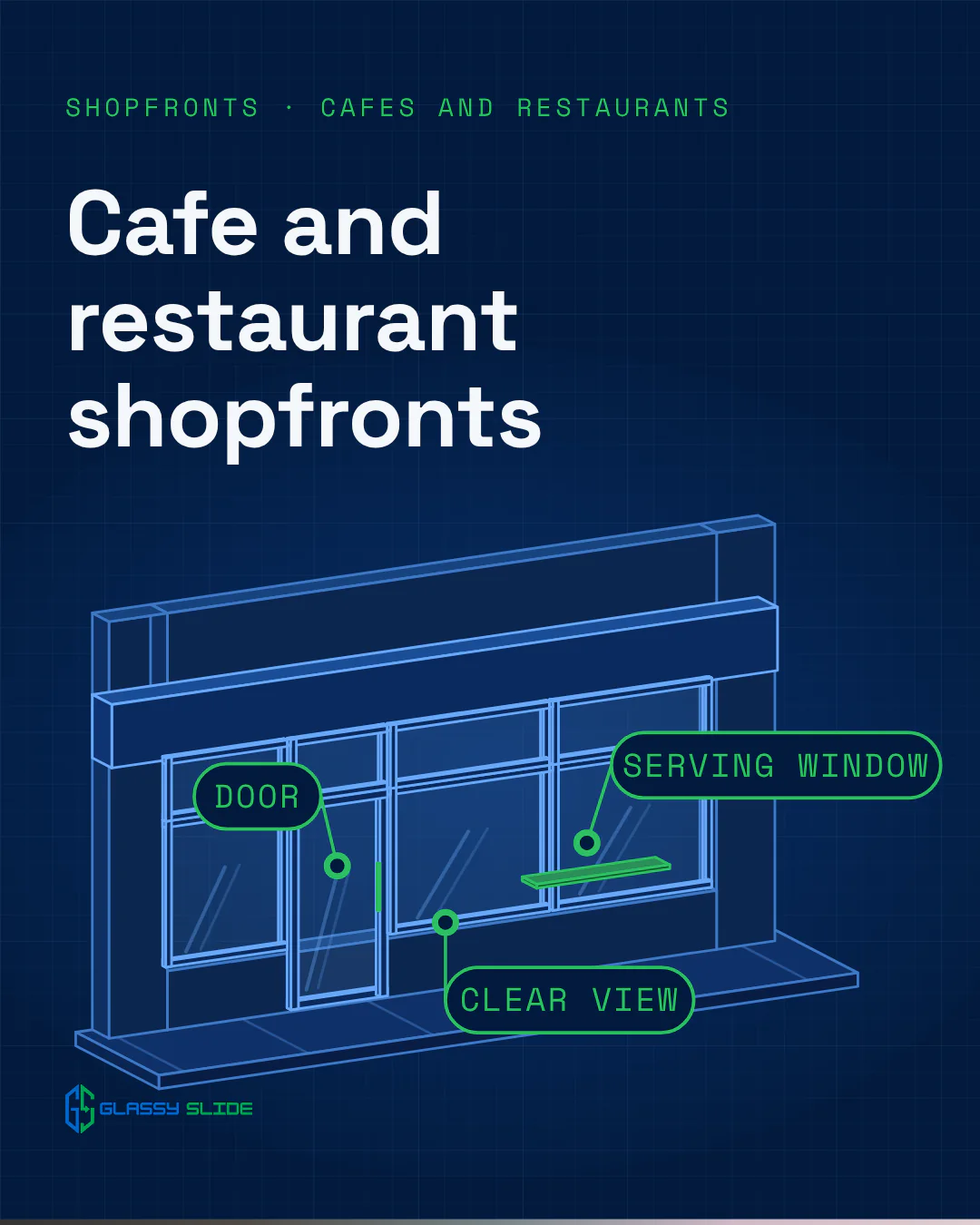
A cafe or restaurant front has more jobs than most. The glass has to bring people in, let the street see the room, give the staff a way to serve a coffee to the footpath, stand up to a busy door, and be easy to keep clean, all while you are trading.
Most of those choices come down to three things: the serving window, the door, and how much of the front is clear glass. This guide takes them in turn, so you can decide what you want before you ask for a quote.
This is general information. We measure the front and confirm what suits your shop before we quote.
What this adds to our other guides
- Frameless glass or aluminium-framed shopfront compares the two systems for any shop.
- Automatic sliding doors for a small shop covers automatic entries, and shop glass door repair covers the closers, pivots and locks on a hinged door.
- Shop window frosting and privacy film and glass door markings and safety glass cover privacy and visibility.
- This guide covers what is particular to a place where people eat, drink and queue: the serving window, the door that takes the traffic and the view in and out.
The serving window
A serving window lets staff pass a coffee or a plate to the footpath without opening the door. It can be a pane in the front that slides or swings, or a fixed pane with a small pass-through.
| Type | What it is like | Think about |
|---|---|---|
| Sliding | One pane slides past another on a track | Keeps the ledge clear and suits a busy counter; the track needs cleaning, and only part of the opening is open at once |
| Hinged or awning | The pane swings out or up on hinges | Opens fully and an awning type shades the ledge; it swings into the footpath or the room, so check what is in the way |
| Fixed with a pass-through | A fixed pane with a small gap or hatch | The simplest, and it keeps the most glass; less airflow and a smaller hand-over space |
Whichever you choose, a few details are worth deciding early:
- Ledge. A shelf or sill on the outside gives customers somewhere to put a cup, and keeps drips off the glass. Decide its depth against the footpath and your lease.
- Seals and closing. The window should close firmly against draughts, dust and rain, and lock when you are shut. Ask what it locks with.
- Hand-over height. Match it to your counter on the inside so staff are not stretching.
- Glass. Safety glass in the window is selected per opening, with AS 1288 as one of the requirements. We say what we have allowed for in the written quote.
A serving window changes the front of the building, so check with your landlord or agent first, and see shopfront permits in Victoria for the permit side. The registered building surveyor and your council decide the permit questions.
The door
The door does more work in a cafe than in most shops, because it is opened and closed all day by people carrying things.
- Hinged glass or aluminium door. The simplest, and the easiest to repair. It needs a good closer, because a door that slams or will not latch is the first thing customers and staff notice. See shop glass door repair.
- Sliding door. Useful where there is little room to swing a door on the footpath or inside. It needs a clean, straight track.
- Automatic sliding door. It opens as someone arrives, which suits a busy entry and anyone with a pram, a trolley or a wheelchair. It needs regular servicing. See automatic sliding doors for a small shop and automatic door servicing, and accessible shop entrances in Victoria for the entry itself.
- Folding or stacking doors. A set of doors across the front can open the cafe to the street in good weather. They need a solid track and sill, a plan for wind, weather and security when open, and the approval of your landlord and the usual permit checks. Ask us to quote them for your front, and we will say what they involve. Our alfresco guide to sliding, stacking and bi-fold doors explains how these door types work.
If the door will be used by many people at once, say so when you ask for a quote.
Keeping the view
For a cafe, the view is part of the sales pitch. People decide to walk in because they can see the room, and the people inside like to see the street.
- Fewer, slimmer frames. A front with large panes and slim aluminium frames shows more glass than one with many small lights. A frameless front shows the most, and usually costs more.
- Clear glass where it matters. Keep the glass at eye level, beside the door and in front of the tables, clear.
- Privacy only where you need it. Frosted or obscure glass can go on a lower band, in front of a prep area or at a corner table, and the rest can stay clear. See shop window frosting and privacy film.
- Sun and heat. A west-facing front can get hot and bright. Tinted or low-emissivity glass can reduce glare and heat, but it changes the look from the street. Ask to see a sample against the glass you have now.
- Markings. Large clear panes beside a door can be mistaken for an opening. See glass door markings and safety glass.
Safe, secure and easy to look after
- Safety glass. Glass in and beside doors is usually safety glass, selected per opening, with AS 1288 as one of the requirements. Different panes in the same front can be different glass.
- Locks after hours. A door and a serving window that lock properly matter in a place with a till and a coffee machine. See shop security and glass.
- Heat and noise. A front that faces the sun or a busy street can be hot or loud inside. See whether shopfront windows need double glazing, including how the code treats cafe and restaurant glass.
- Cleaning. Ask where the dirt will collect: tracks, ledges and the lower edge of the glass, and make sure you can reach them.
- Breakage. If the glass breaks out of hours, keep clear and call us. We make shopfronts safe and board them up 24/7. See the first hour after a smash and what to send us when shop glass breaks at night.
What to tell us when you ask for a quote
- What you want from the front. A new serving window, a new door, a fully new front, or a repair.
- Photos. The whole front from across the street, each door and the bay where a serving window might go.
- Your counter and layout. Where the counter, the queue and the tables sit in relation to the glass.
- Door type. Hinged, sliding, automatic or folding, and how many people use it at peak.
- Aluminium-framed or frameless. If you are not sure, say so, and see the comparison.
- Lease and approvals. Whether your landlord or agent has consented, and any permit notes you have. Changing a shopfront between tenants lists the questions to ask.
We measure first, and put the price in writing with the glass, the frame and the doors named for each opening. See what to look for in a shopfront glass quote if you are comparing quotes, and how long a shopfront replacement takes for planning around your trading.
Talk to us
We supply and fit aluminium-framed and frameless shopfronts across Melbourne, along with the glass and aluminium work a cafe or restaurant front needs. Send photos of your front on WhatsApp, or use the quote form. See shopfronts and entry doors or ask for a shopfront quote.
Questions
Do you supply shopfronts for cafes and restaurants?
Yes. We supply and fit aluminium-framed and frameless shopfronts across Melbourne, and we supply the glass and aluminium work a cafe or restaurant front needs, including the doors and serving windows. We measure on site and put the price in writing.
Can a serving window be added to an existing shopfront?
Often, yes. A pane in the front can be replaced with a window that opens, or a new opening can be made in a bay. It depends on the frame, the wall and the lease, so we look at the front when we measure. Check with your landlord or agent before any change to the building.
Should a serving window slide, hinge or be fixed with a pass-through?
A sliding window keeps the ledge clear and suits a counter that is busy. A hinged or awning window can open further and shade the ledge, but it swings into the space. A fixed pane with a small pass-through is the simplest, and keeps the most glass. We talk through which suits your counter and your street.
Which door suits a busy cafe, hinged, sliding or automatic?
A hinged door is the simplest and the easiest to repair. A sliding door saves swing space on a narrow footpath or a tight entry. An automatic sliding door suits a busy entry and people with prams, trolleys or wheelchairs, but it needs servicing. See our guide to automatic sliding doors for a small shop.
Can the front open up in warm weather?
A folding or stacking door set across the front can open a cafe to the street. It needs a good track and sill, a plan for weather, wind and security, and the approval of your landlord and council where the front changes. Ask us to quote it, and we will say what it involves for your front.
How do I keep the view and still have some privacy?
Use frosted or obscure glass only where you need it, such as a lower band at seat height or the glass in front of a prep area, and keep the rest clear. We supply frosted glass, and our frosting guide explains the options.
Does the glass beside a cafe door need to be safety glass?
Glass in and beside doors is usually safety glass, selected per opening, with AS 1288 as one of the requirements. A glazier assesses each opening, so different panes in one front can be different glass. Glass that could be mistaken for an opening also needs to be visible, which our door markings guide explains.
What if the front breaks while the cafe is closed?
We make shopfronts safe and board them up 24/7. Call or WhatsApp 0410 107 794, and send photos if you can, as our guide to what to send us explains.
Was this guide helpful?

We supply and install double-glazed aluminium windows and doors, alfresco enclosures and glass partitions, and repair timber windows across Melbourne from our base in Bundoora. 5.0 ★ on Google.
Keep reading
Related guides
Shopfronts5 min read
Do shopfront windows need double glazing? Heat, noise and the NCC
Does a shop window have to be double glazed? What NCC 2025 says about shopfront glass, when double glazing helps with heat and noise, and what to ask for.

Shopfronts7 min read
Plate glass insurance for shops: is it worth it?
What shop glass cover usually includes, the questions to ask before you buy it, and how to decide if it is worth it for your shopfront in Victoria.

Shopfronts5 min read
Clinic, pharmacy and salon shopfronts: privacy with easy access
Shopfront glass for a clinic, pharmacy or salon in Melbourne: privacy where you need it, clear glass where you don't, and an entry everyone can use.